CRA Record-Keeping Requirements: What to Keep and for How Long (2026)
Everything the CRA requires Canadian businesses to keep — which records, how long, digital vs paper rules, and penalties for non-compliance. Complete reference guide.
 Eric Tech·Apr 20, 2026·15 min read·
Why CRA Record Keeping Requirements Matter
Every Canadian business, from a solo freelancer to a multi-employee corporation, is legally required to keep records. This is not optional. Section 230 of the Income Tax Act makes it a legal obligation, and the CRA enforces it with real penalties.
The stakes are straightforward: if the CRA audits you and you cannot produce the records they ask for, your deductions get denied. That means higher taxes owed, plus interest, plus potential penalties of up to $2,500 per failure.
This guide covers exactly what the CRA requires you to keep, how long to keep it, whether digital records are acceptable, and what happens if you fall short.
These requirements apply to all Canadian businesses: sole proprietors, partnerships, corporations, and anyone earning self-employment income. If you file a T2125, T2, or GST/HST return, you must keep records.
What Records Must You Keep?
The CRA requires you to keep records that allow them to verify your income, deductions, credits, and tax obligations. According to the CRA's official guidance on keeping records, this includes both source documents and accounting records.
Source Documents
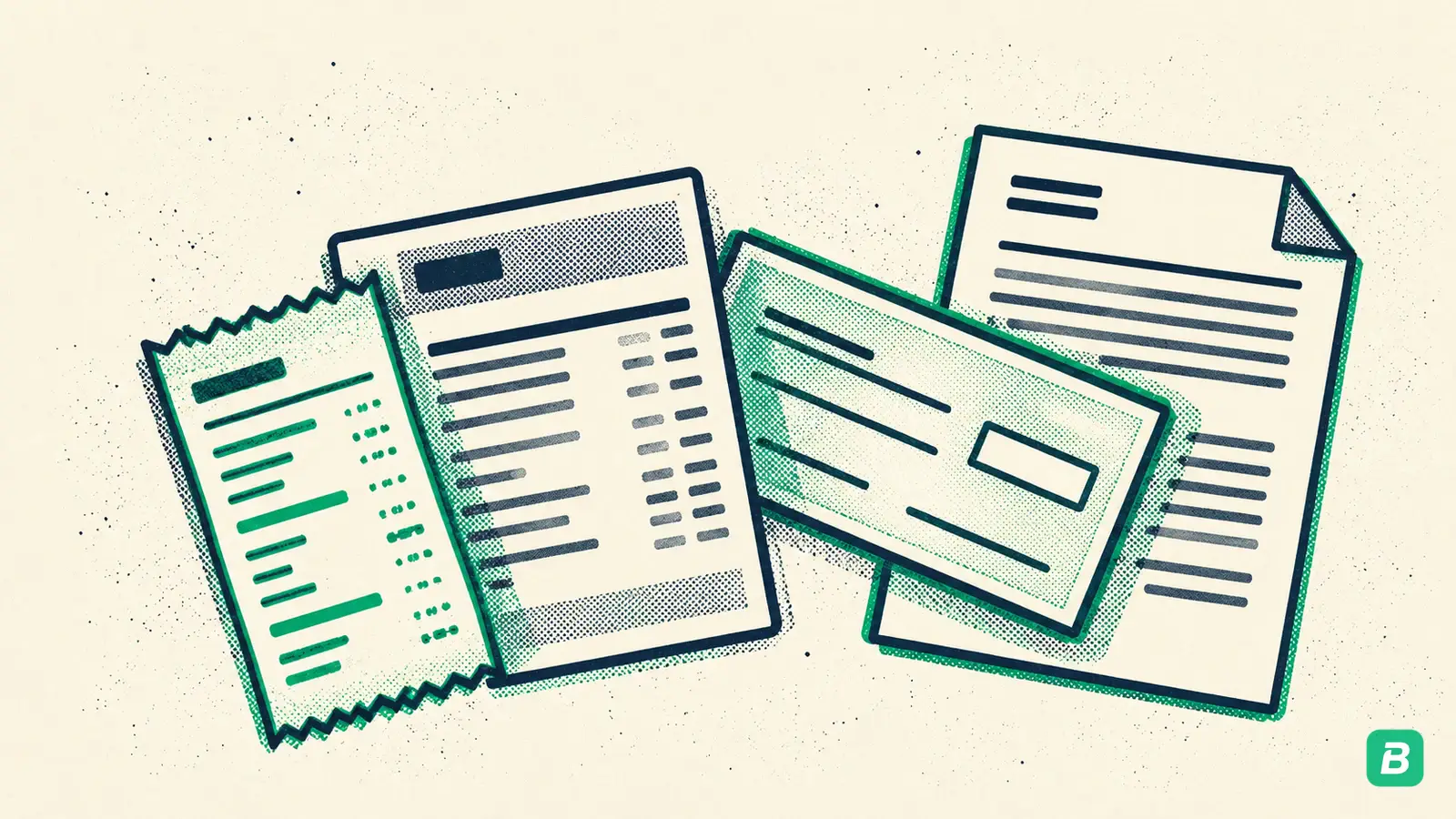
Source documents are the original records that support your transactions:
- Sales invoices and receipts — every invoice you issue and every receipt you provide to customers
- Purchase receipts and invoices — proof of every business expense you claim
- Bank statements — all accounts used for business purposes
- Cancelled cheques — or digital images provided by your bank
- Credit card statements — for any card used for business purchases
- Contracts and agreements — leases, service agreements, loan documents
- Deposit slips and wire transfer records
- Import/export documentation — if applicable to your business
Accounting Records
Beyond source documents, the CRA expects you to maintain:
- General ledger and journal entries — the core of your bookkeeping system
- Accounts receivable and payable ledgers
- Year-end financial statements
- Bank reconciliations
- Trial balances
Specialized Records by Activity
Depending on your business activities, you may also need to maintain:
- Payroll records — T4 slips, ROEs, CPP/EI remittance records, timesheets
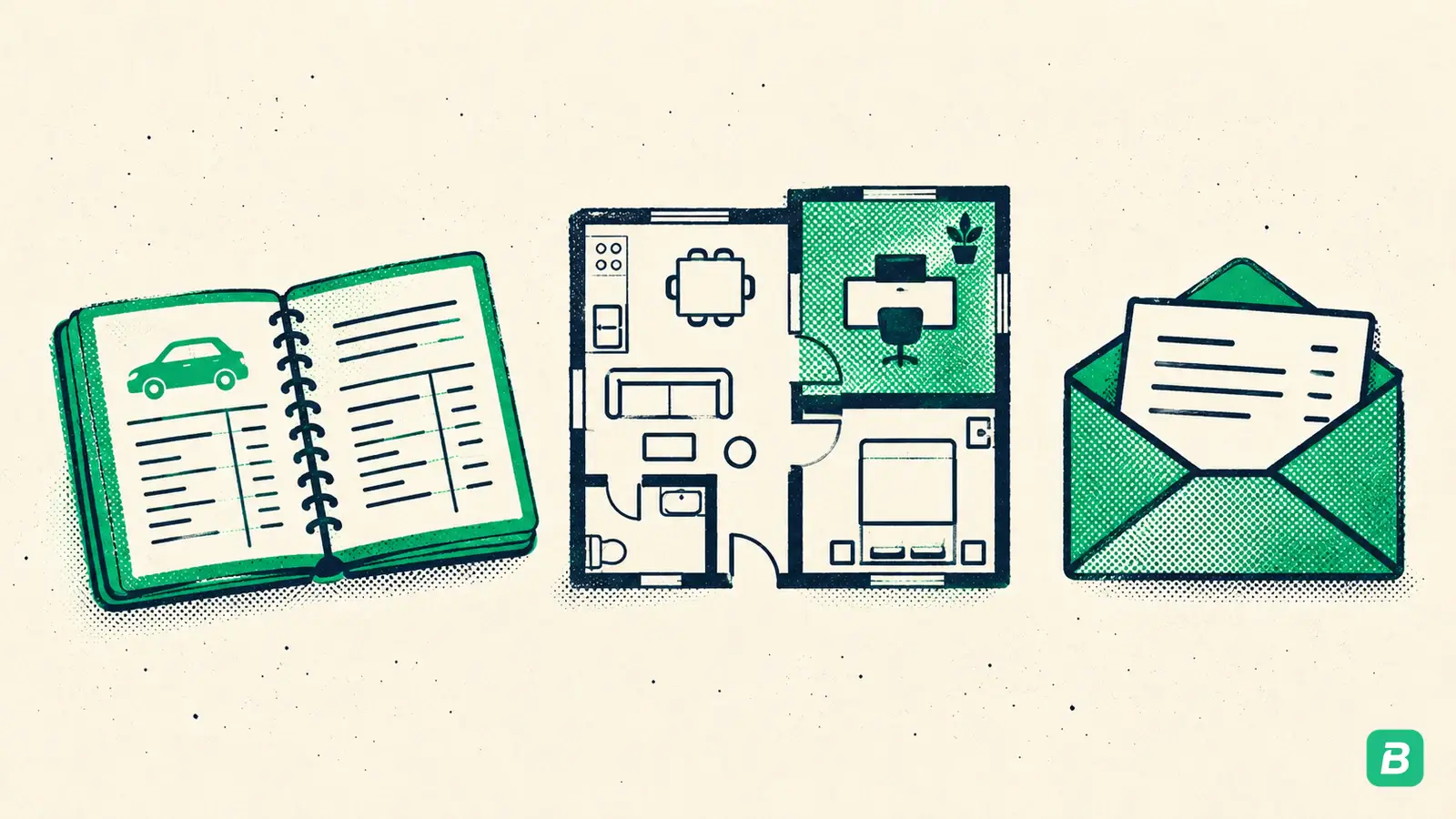
- Vehicle logbooks — if claiming motor vehicle expenses, you need a logbook showing business vs. personal kilometres driven
- GST/HST records — returns filed, input tax credit (ITC) documentation, election forms. See our GST/HST guide for details
- Capital property records — purchase price, improvements, depreciation schedules, and disposition records (sale price, date, expenses of disposition)
- Inventory records — opening and closing counts, cost calculations
- Home office records — square footage calculations, utility bills, mortgage interest or rent receipts
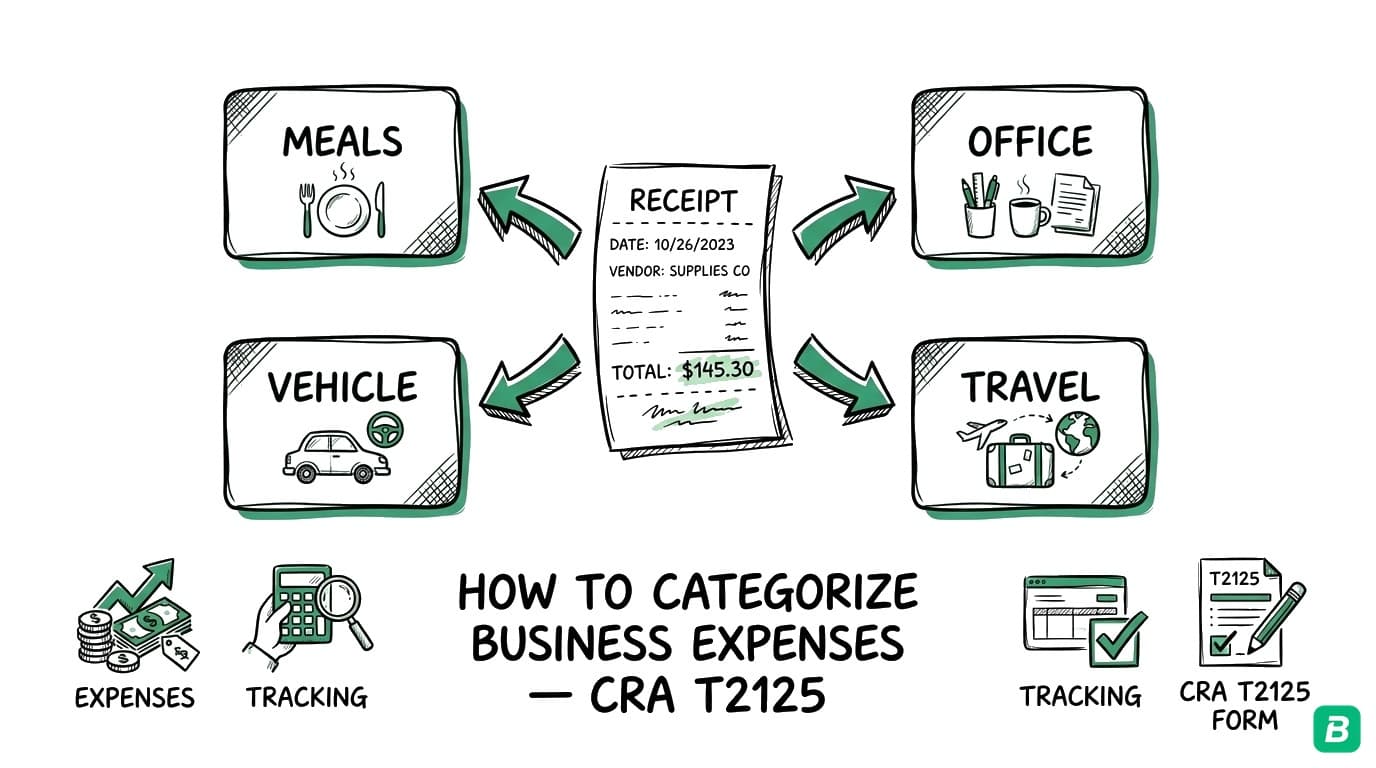
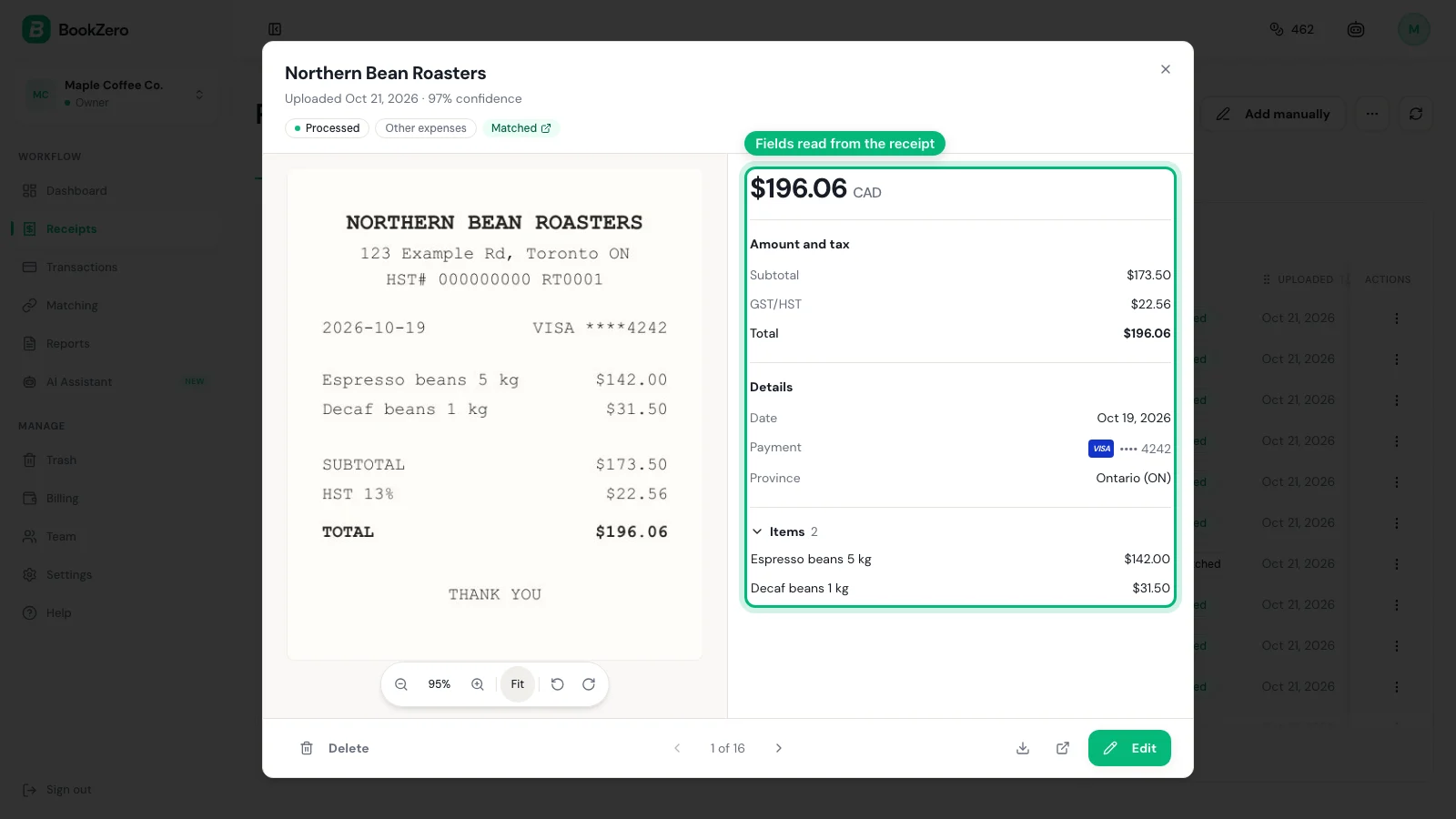
For every expense you claim, your receipt must show the date, amount, vendor name, and what was purchased. A credit card statement alone is not sufficient — you need the itemized receipt. Learn how to track receipts properly.
How Long to Keep Business Records in Canada
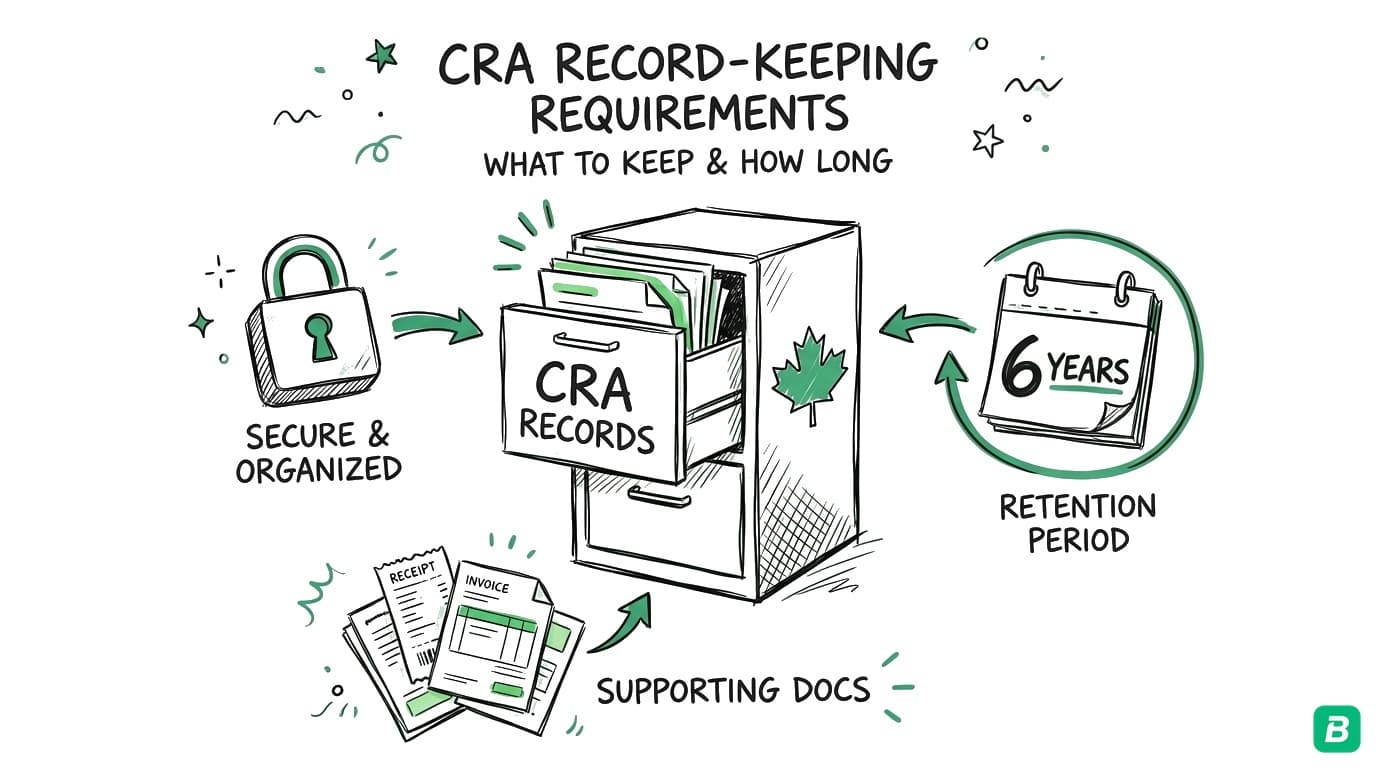
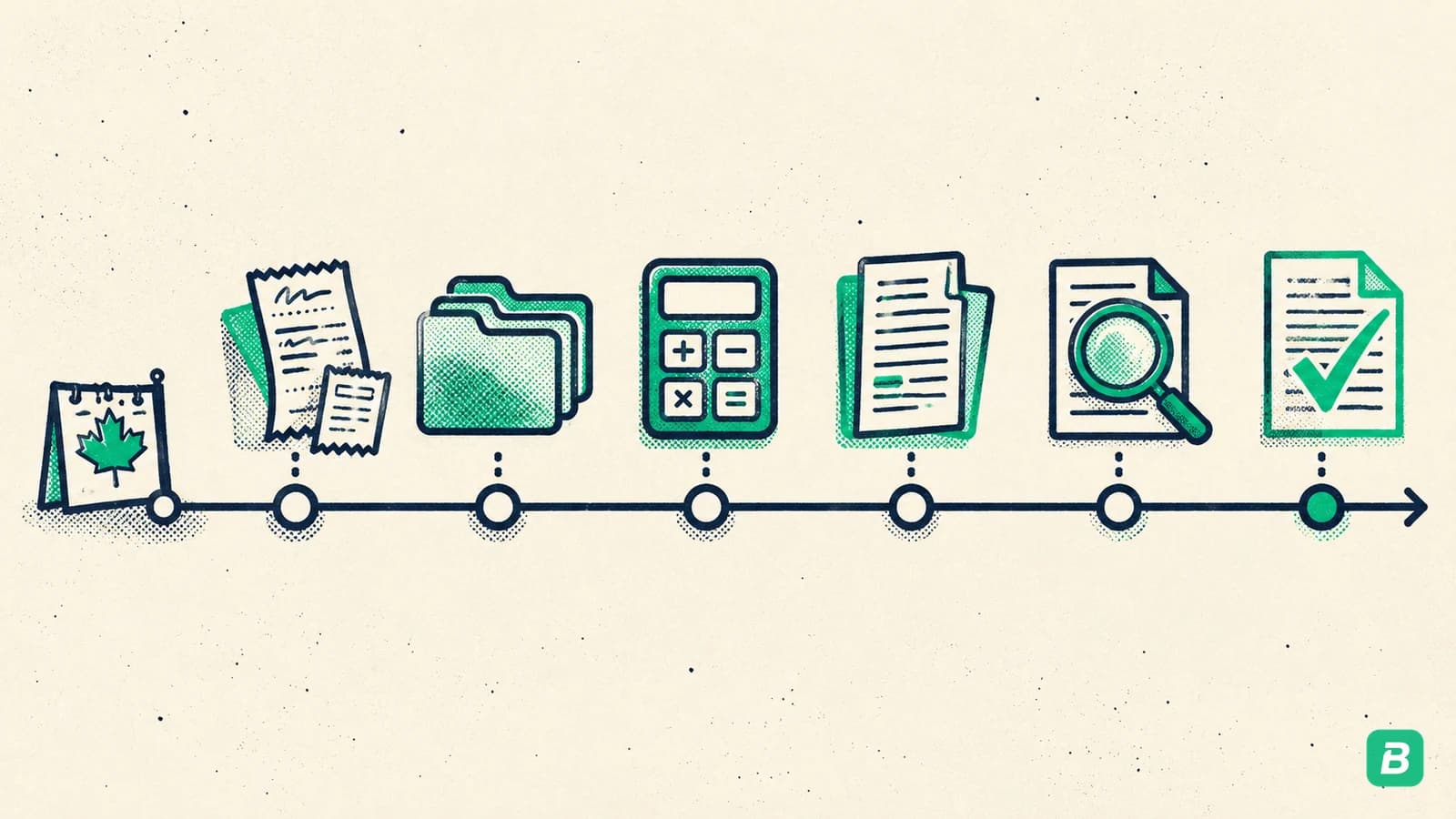
The general rule is six years, but the starting point varies depending on the record type. Here is a complete breakdown:
| Record Type | Retention Period | Starting Point |
|---|---|---|
| General business records (income, expenses) | 6 years | End of the tax year they relate to |
| GST/HST records | 6 years | End of the reporting period they relate to |
| Capital property records | 6 years | After the year you dispose of the property |
| Employee/payroll records | 6 years | After the year employment ends |
| Corporate records (after dissolution) | 2 years after dissolution | Then 6 years from the last tax year filed |
| Records under objection or appeal | Until resolved | Then 6 years from the date of resolution |
| Records where permission to destroy was denied | Until CRA grants permission | Then as CRA directs |
Source: CRA — How long do you keep your income tax records
If you filed your 2025 tax return in April 2026, the six-year period for 2025 records starts at the end of 2025 (the tax year) — meaning you must keep those records until at least the end of 2031. If you filed late, keep them even longer to be safe.
Practical Examples
- You bought a laptop in January 2025 for $1,800. You claimed CCA (depreciation) on it. You must keep that purchase receipt for as long as you own the laptop, then six years after the year you dispose of it or write it off completely.
- You sold your business vehicle in March 2026. Keep all records related to that vehicle (purchase, logbooks, repairs) until the end of 2032.
- You filed a GST/HST return for Q4 2025. Keep supporting documents until at least the end of 2031.
When Can You Destroy Records?
You may destroy records after the retention period ends, unless:
- You have filed an objection or appeal that is still pending
- The CRA has notified you of an audit or review
- You have requested permission to destroy records early and the CRA has not yet responded
If none of these apply and the six-year retention period has passed, you are free to destroy the records. Some accountants recommend keeping them for seven years as a buffer.
Digital vs. Paper: CRA Rules for Electronic Records
The CRA explicitly accepts electronic records. Their policy is documented in Information Circular IC05-1R1, which lays out the requirements for digital record keeping.
What the CRA Requires for Digital Records
Your electronic records must:
- Be readable and accessible — the CRA must be able to view them without specialized software you have not provided
- Be complete and unaltered — the digital copy must contain all information from the original
- Be available upon request — you must be able to produce records for a CRA auditor within a reasonable timeframe
- Be stored in an accessible location — records stored in the cloud are acceptable, but they must be accessible from Canada
- Be backed up — you must have adequate backup procedures to prevent data loss
Can You Scan Paper Receipts and Destroy the Originals?
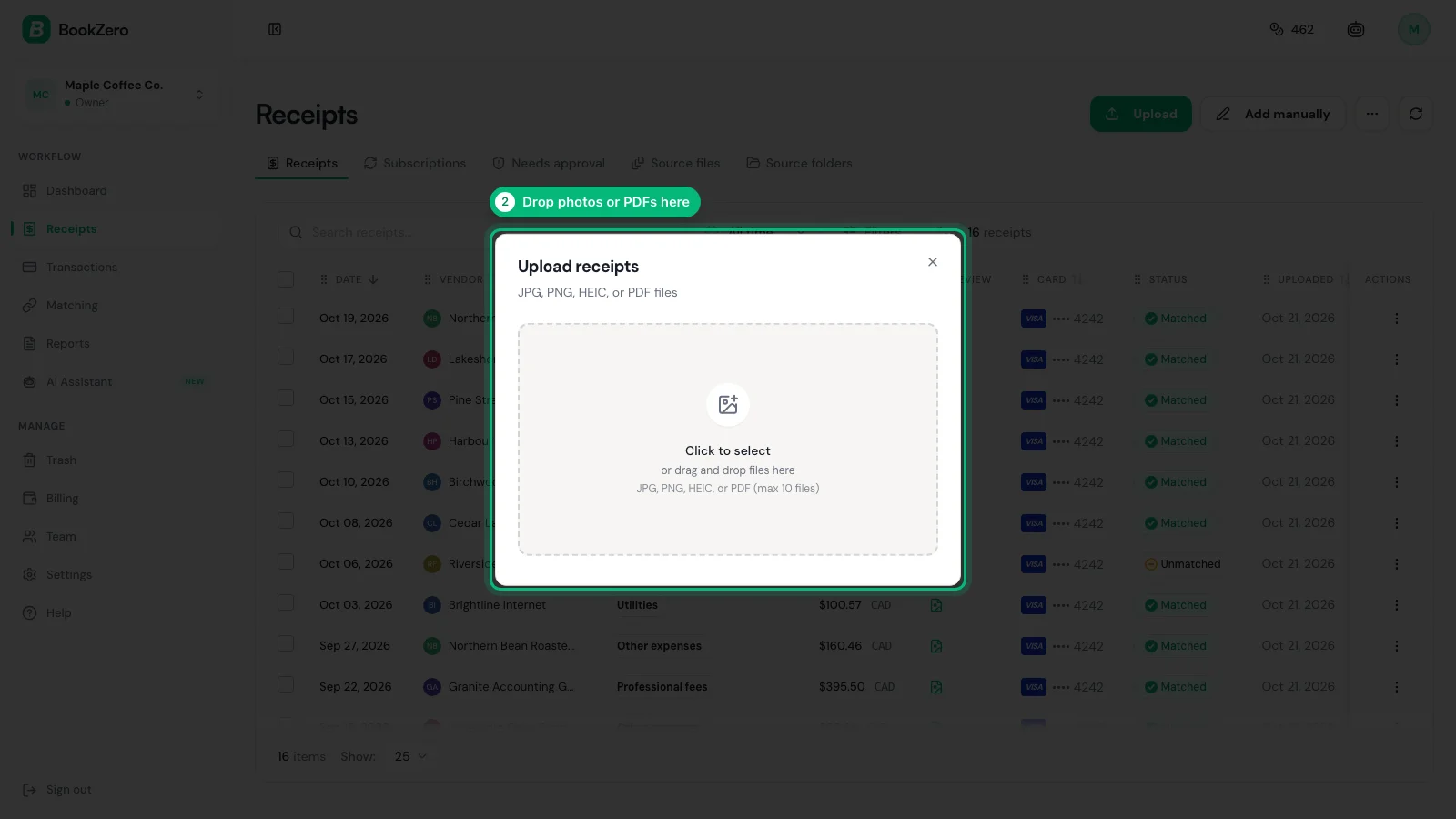
Yes. The CRA allows you to scan paper documents and destroy the originals, provided:
- The digital image is a complete and accurate reproduction of the original
- All details are legible — amounts, dates, vendor names, items purchased
- The scan is stored in a format that cannot be easily altered (PDF is preferred over editable formats)
- You have a reliable backup system in place
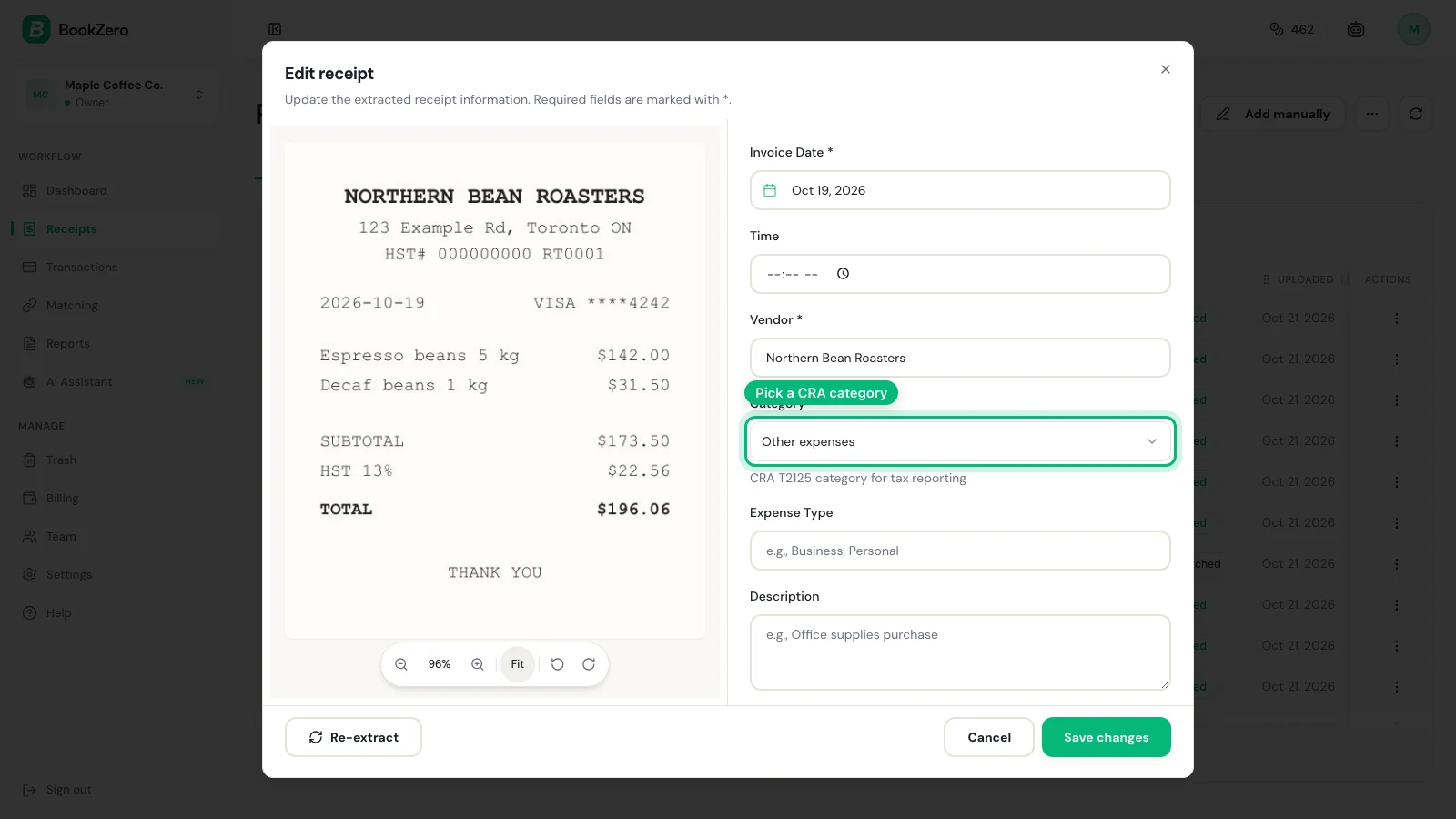
This means you can photograph or scan your receipts on the day you receive them, verify the image is clear, and shred the paper original. Tools like BookZero that store receipt images alongside extracted data make this process automatic.
Receipts you receive digitally — from Amazon, Walmart online orders, Uber, or email — are already in digital format. You do not need to print and re-scan them. Simply store them in your record-keeping system.
Cloud Storage Is Acceptable
The CRA does not require you to store records on physical media in Canada. Cloud storage (Google Drive, Dropbox, iCloud, or a dedicated bookkeeping app) is acceptable as long as:
- Records are accessible from a location in Canada
- You can provide them to the CRA in a readable format upon request
- Your provider offers adequate data protection and backup
What Format Should Records Be In?
The CRA does not mandate a specific file format, but they must be able to read the records without purchasing specialized software. Practical choices include:
- PDF — universally readable, difficult to alter
- JPEG/PNG — for scanned receipts and photos
- CSV/Excel — for accounting data and transaction exports
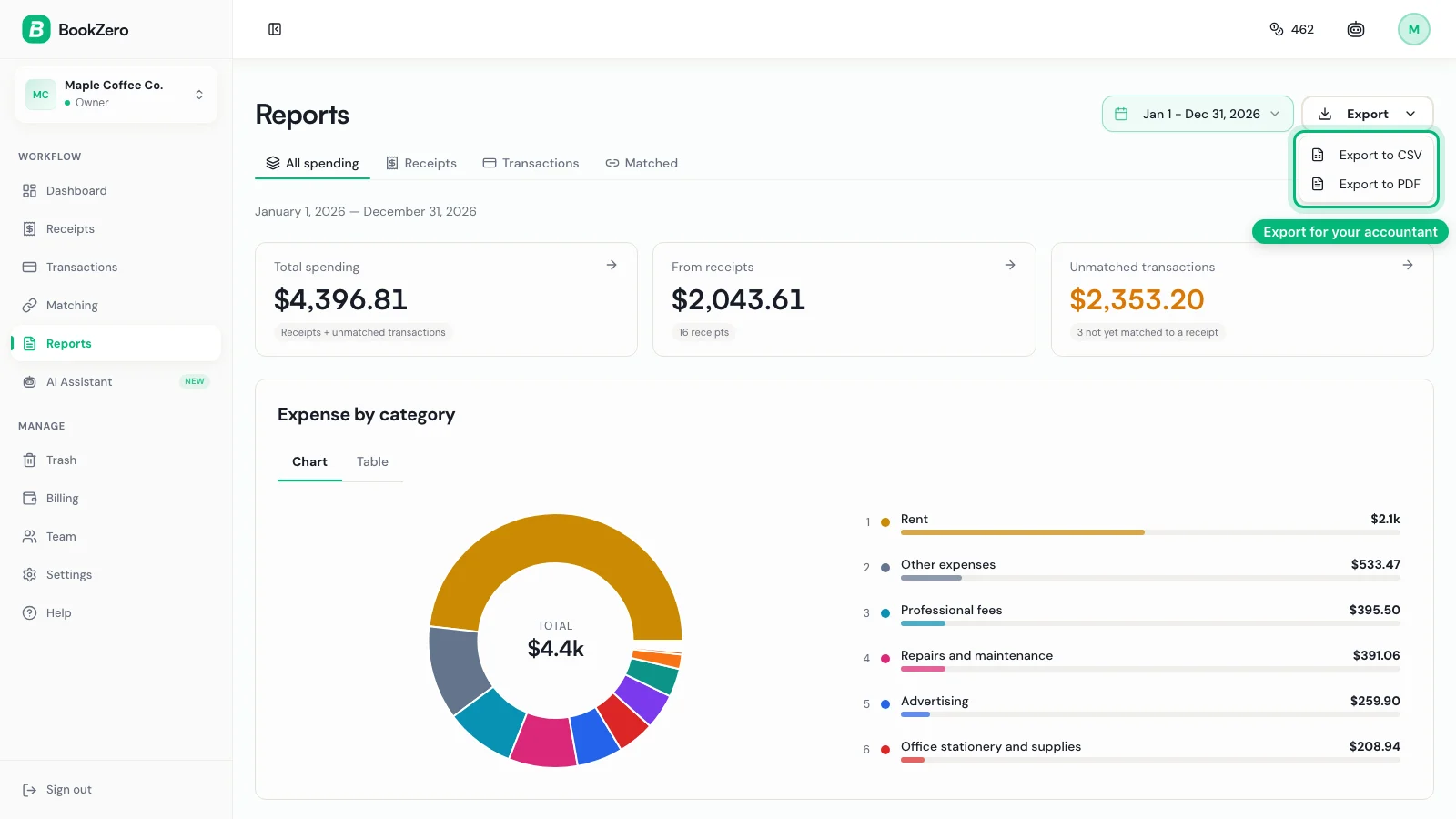
- Accounting software exports — most major platforms can export to PDF or CSV
Penalties for Non-Compliance
The CRA takes record-keeping failures seriously. Here is what you face:
Financial Penalties
- Failure to keep adequate records: up to $2,500 per failure under Section 230 of the Income Tax Act
- Denied deductions: if the CRA cannot verify an expense due to missing records, the deduction is disallowed — you pay tax on that amount plus interest
- Gross negligence penalty: 50% of the tax owing on unreported income or false deductions, if the CRA determines you were grossly negligent
- Late-filing penalties compound: missing records often lead to late or amended filings, which carry their own penalty structure
Audit Consequences
During an audit, the burden of proof rests on you as the taxpayer. If you cannot produce records:
- The CRA will estimate your income using alternative methods (net worth assessment, bank deposit analysis) — these estimates are rarely in your favour
- Your deductions will be denied for any expense you cannot substantiate with a receipt or record
- The auditor may expand the scope of the audit if they find gaps in your records
Criminal Prosecution
In extreme cases of repeated or wilful non-compliance:
- The CRA can recommend criminal prosecution under Section 238 of the Income Tax Act
- Conviction carries fines of $1,000 to $25,000 and/or up to 12 months imprisonment
- This is rare but not unheard of, particularly in cases involving deliberate record destruction
If the CRA has notified you of an audit, review, or investigation, destroying records is a criminal offence. Keep everything until the matter is fully resolved — including any subsequent objection or appeal period — plus six years.
Best Practices for CRA Compliance
Following these practices will keep you compliant and make your life significantly easier if an audit ever arrives.
1. Use a Digital System from Day One
A dedicated bookkeeping tool that stores receipt images alongside categorized transaction data is the most reliable way to maintain CRA-compliant records. You get:
- Automatic date and amount extraction
- Categorization that aligns with T2125 expense categories
- Searchable records you can produce instantly for the CRA
- Built-in backup through cloud storage
2. Capture Receipts Immediately
The number one reason businesses fail to produce records during an audit is that they never captured the receipt in the first place. Make it a habit to photograph or scan receipts the same day. Waiting until month-end or year-end guarantees lost records.
3. Reconcile Monthly
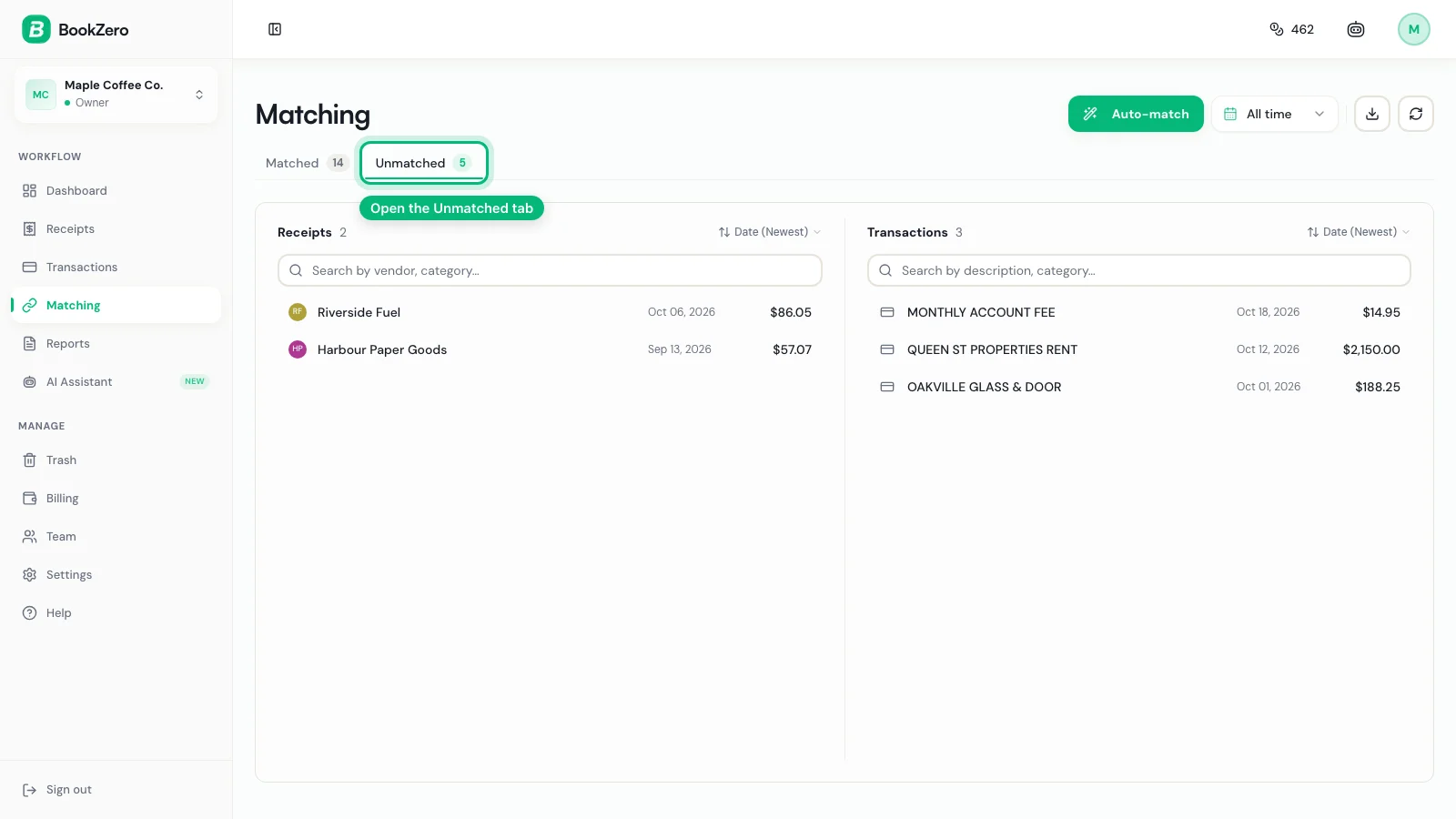
Compare your recorded transactions against your bank and credit card statements every month. This catches:
- Missing receipts (you see the charge but have no receipt)
- Duplicate entries
- Uncategorized transactions
- Potential fraud
4. Separate Business and Personal
Use a dedicated business bank account and credit card. Mixing personal and business finances makes it exponentially harder to produce clean records during an audit, and raises red flags with CRA auditors.
5. Set Calendar Reminders for Destruction Dates
After the six-year retention period passes, you can destroy old records to reduce storage costs and complexity. Set annual calendar reminders to review what can be safely destroyed. But always check first that there is no open audit, objection, or appeal.
6. Back Up Redundantly
Store records in at least two locations. If your only copy is on a laptop that gets stolen or a hard drive that fails, you have no records and no defence. Cloud storage with automatic backup is the simplest solution.
7. Keep a Record of Your Record-Keeping System
Document how your records are organized. If the CRA asks for your 2024 Q3 GST/HST input tax credit documentation, you should be able to find it in under five minutes. An organized system is as important as having the records at all.
Frequently Asked Questions
Do I need to keep paper receipts if I have digital copies?
No. The CRA accepts digital copies as long as they are complete, legible, and stored in a system with adequate backup. You can scan or photograph paper receipts and destroy the originals. The key requirement is that the digital version shows all details from the original — date, amount, vendor, items, and tax charged.
What if I lost a receipt for a business expense?
You should attempt to obtain a replacement. Many vendors can reissue receipts — check your online accounts for Amazon, Walmart, and Uber. Your bank or credit card statement can serve as supporting evidence, though the CRA prefers the original itemized receipt. If audited, a missing receipt does not automatically disqualify the deduction, but you need some corroborating evidence (bank record, email confirmation, calendar entry showing the meeting).
Can the CRA demand records older than six years?
In limited circumstances, yes. If you never filed a return for a particular year, there is no starting point for the six-year clock — those records must be kept indefinitely until you file. If there is fraud or misrepresentation, the CRA can reassess beyond the normal period and demand supporting records. Additionally, if you have an open objection or appeal, all related records must be kept until resolution.
What records do I need for vehicle expense claims?
You need a logbook showing: the date of each trip, the destination, the purpose (business reason), and the kilometres driven. You also need the total kilometres driven in the year (business and personal combined) and records of all vehicle expenses (fuel, insurance, maintenance, lease payments or loan interest, licence and registration). The CRA specifically requires the logbook to distinguish business from personal use.
Is accounting software sufficient, or do I need the original receipts too?
Both. Your accounting software (or spreadsheet) serves as your accounting records — the general ledger, categorized expenses, income tracking. But the CRA also requires source documents: the actual receipts, invoices, bank statements, and contracts that support your entries. Think of it as two layers: the summary (your books) and the proof (your source documents). A tool like BookZero combines both layers by storing receipt images linked to each transaction entry.
Stay Compliant Without the Headache
CRA record-keeping requirements are not complicated, but they are unforgiving. The rules are clear: keep everything for six years, make sure it is accessible, and never destroy records while any CRA matter is open.
The businesses that get into trouble are not usually trying to hide anything — they simply did not have a system in place and lost records over time. A digital bookkeeping system that captures receipts as you go, categorizes them automatically, and stores everything in the cloud is the simplest path to effortless compliance.
For a broader view of how record keeping fits into your overall bookkeeping practice, see our complete bookkeeping guide for Canadian businesses.
BookZero stores receipt images alongside extracted data — CRA-compliant record keeping on autopilot.



Eric Tech· Founder, BookZero.ai
Founder of BookZero. Building AI-powered bookkeeping tools for US and Canadian freelancers and small businesses.
View all postsStay ahead of tax season
Tax tips, deduction strategies, and feature announcements straight to your inbox. No spam, unsubscribe anytime.