Small Business Bookkeeping: The Complete 2026 Guide
Small business bookkeeping explained: what the books cover, who should keep them, single or double entry, the monthly close, contractors and records.
 Eric Tech·Oct 21, 2026·9 min read·
Small business bookkeeping is the running record of every dollar that comes in and goes out of your business, with proof behind each one. It covers sales, expenses, bank and card statements, contractors and payroll. Done monthly, it shows your profit and gives your preparer clean numbers.
Record every sale and cost with proof, match it to the bank monthly, and keep records at least three years.
Jump to:
- Step 1: What the books cover
- Step 2: Who keeps them
- Step 3: Single or double entry
- Step 4: Account and categories
- Step 5: Monthly close
- Step 6: Contractors and payroll
- Step 7: Records and tax
Step 1: Know what your books cover
This is the overview. For the US setup steps one by one, read our small company bookkeeping guide.
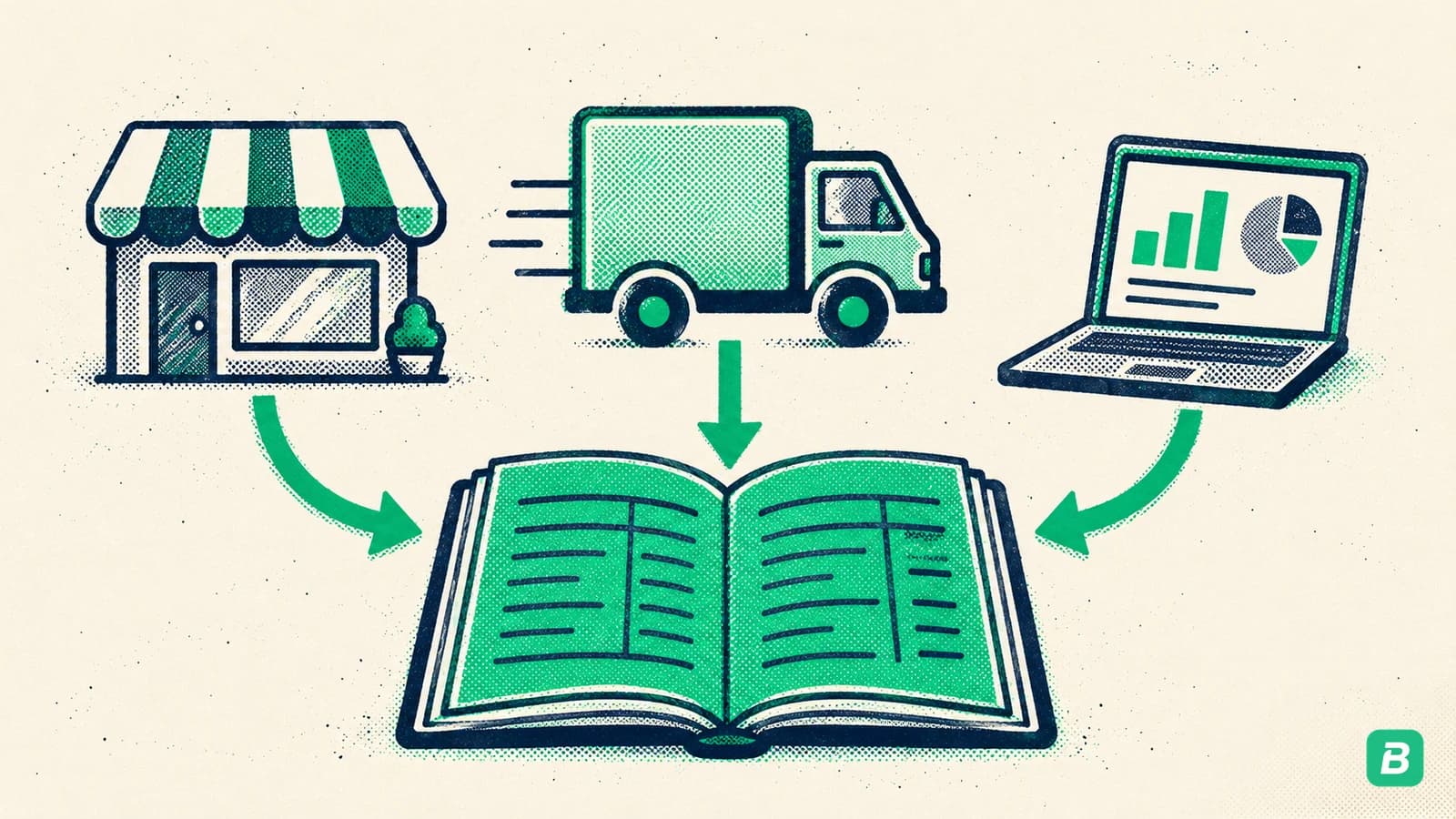
Bookkeeping is more than a receipt pile. A small business's books cover six jobs:
| Job | What it means | Proof you keep |
|---|---|---|
| Sales | Every invoice and payment received | Invoices, deposit records |
| Expenses | Every cost, sorted into a category | Receipts, bills |
| Reconciliation | Checking the books against each bank and card statement | Monthly statements |
| Contractors | Who you paid and how much | W-9s, payment records |
| Payroll | Wages and the tax held back | Payroll reports |
| Reports | Profit and loss, tax totals | The reports themselves |
IRS Publication 583 names the proof: sales slips, paid bills, invoices, receipts, deposit slips and canceled checks. Those are your supporting documents.
No employees and no contractors? Then three jobs matter: sales, expenses and reconciliation.
Step 2: Decide who keeps the books
There are three ways to get it done.
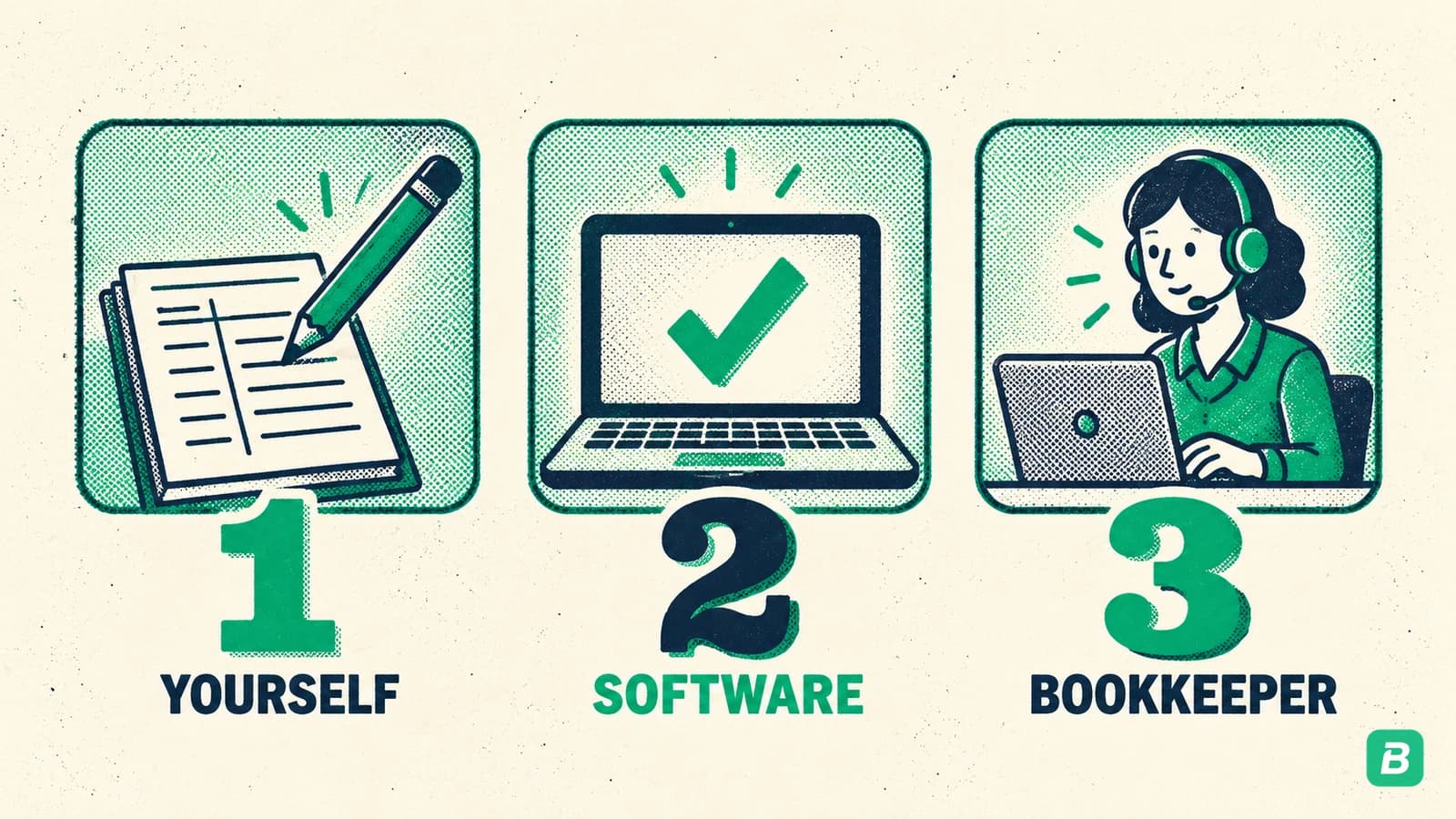
| Option | Cost | Best when |
|---|---|---|
| Yourself, by spreadsheet | Your time | A handful of transactions a month |
| Software | A monthly plan | Dozens to hundreds of transactions; you want receipts matched for you |
| A bookkeeper | An hourly or monthly fee | Payroll, inventory, or no time at all |
For a sense of what a bookkeeper costs, the US Bureau of Labor Statistics puts the median pay for bookkeeping, accounting and auditing clerks at $50,670 a year, or $24.36 an hour (May 2025). The same page projects jobs in the field to fall 6% from 2025 to 2035.
A good split for most owners: software does the daily capture and matching, and a preparer checks it once a year.Step 3: Pick single or double entry
Single entry is one list: date, description, amount in or out. It works for a sole proprietor with one account and no inventory.
Double entry records every transaction twice, as a debit in one account and a credit in another, so the books balance. It's what you need for a balance sheet, loans, inventory or more than one owner.
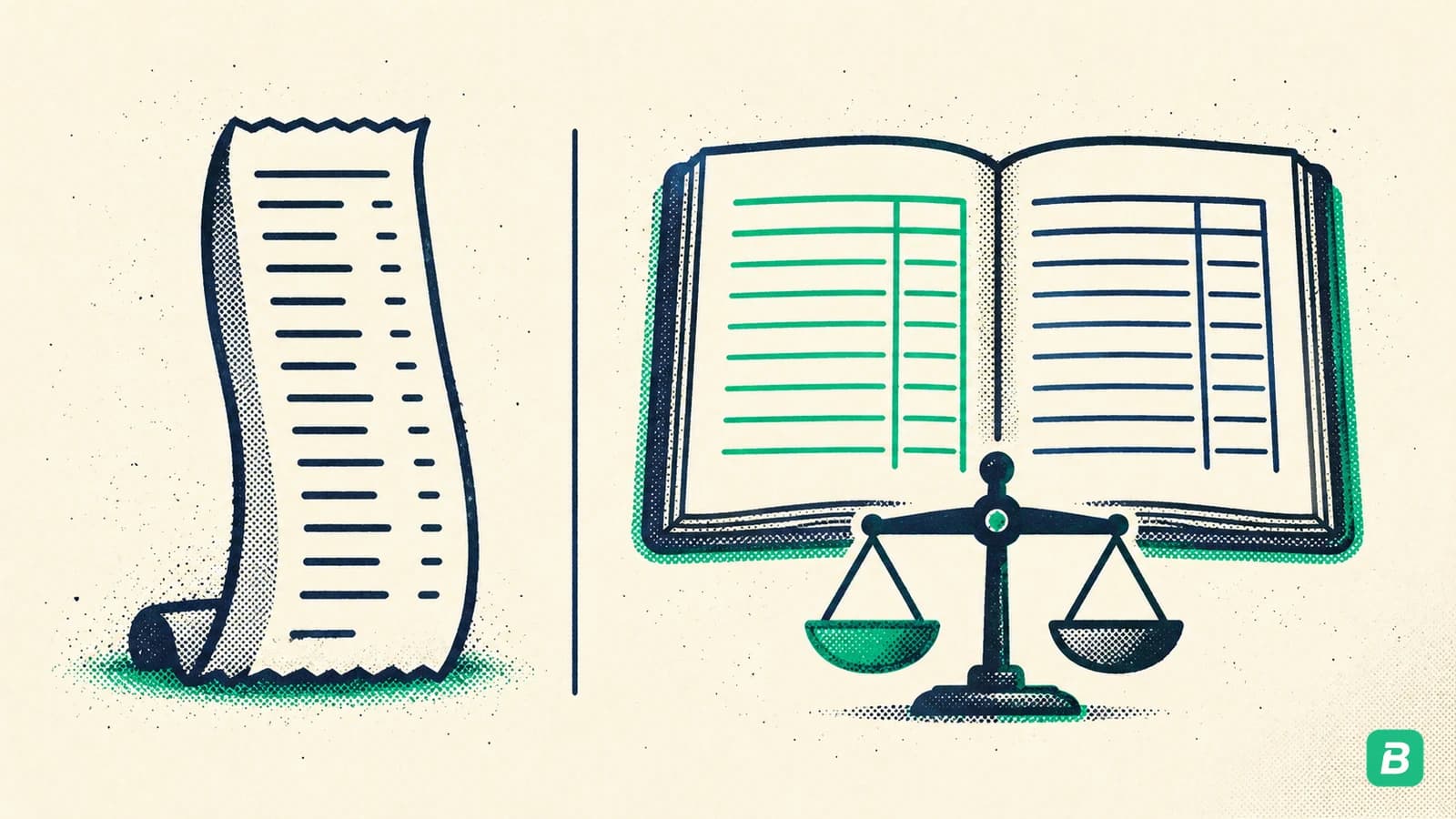
Your software usually decides this for you. Spreadsheets are single entry unless you build the second side. Our double-entry bookkeeping guide shows how the two sides work, with examples.
Step 4: Set up the account and categories
Two things go in before the first transaction:
- A business bank account and card. Publication 583 says to keep your business account separate from your personal checking account.
- A category list. For a sole proprietor or single-member LLC, use the Schedule C lines: Advertising, Office expense, Supplies, Travel and the rest. Our Schedule C categories list has all of them.
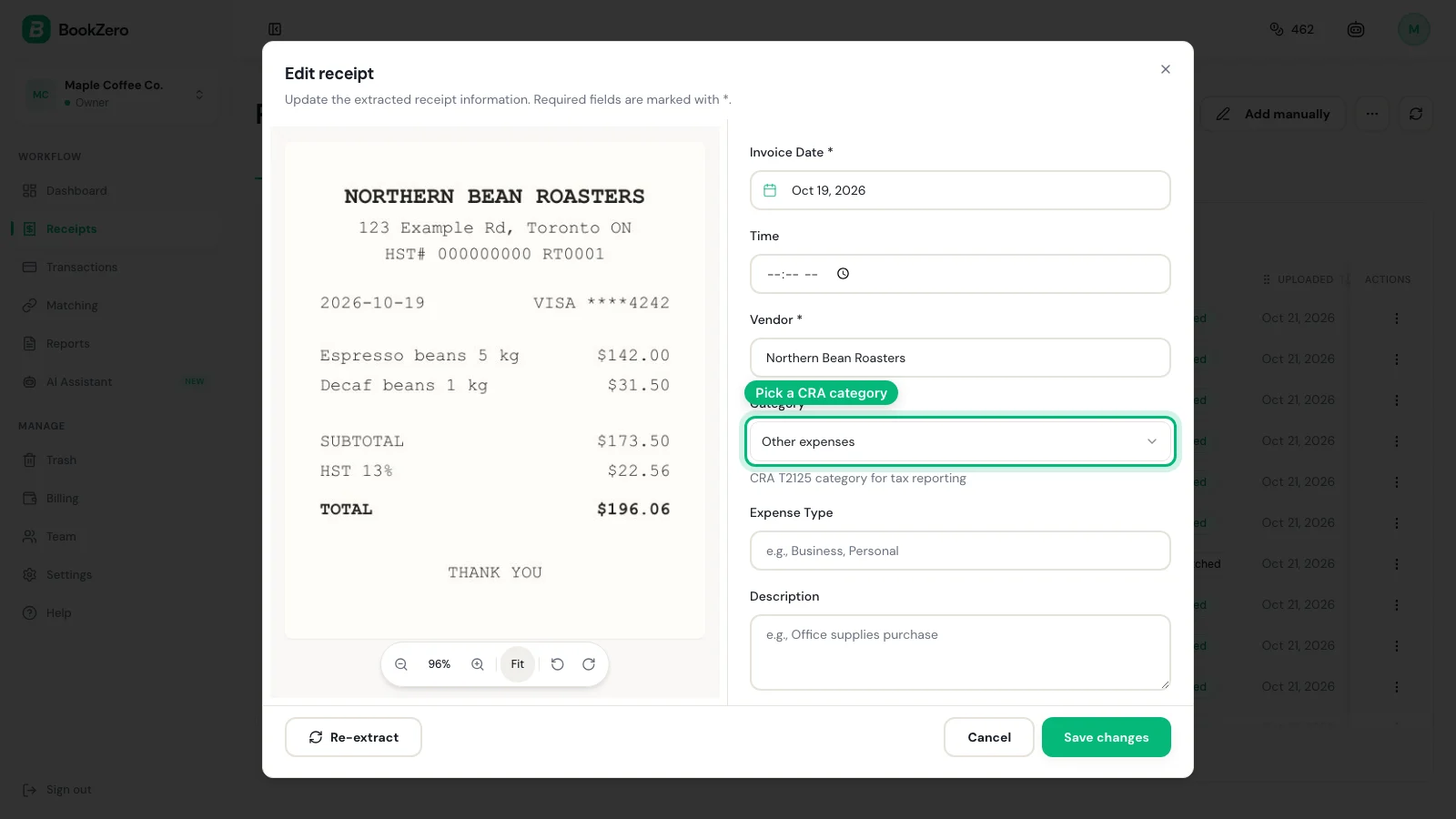
Cash or accrual is the other early choice: cash counts money when it moves, accrual when it's earned or owed. The small company bookkeeping guide walks through that choice and the rest of the US setup.
Step 5: Close the books every month
The monthly close is the heart of small business bookkeeping. Four steps:
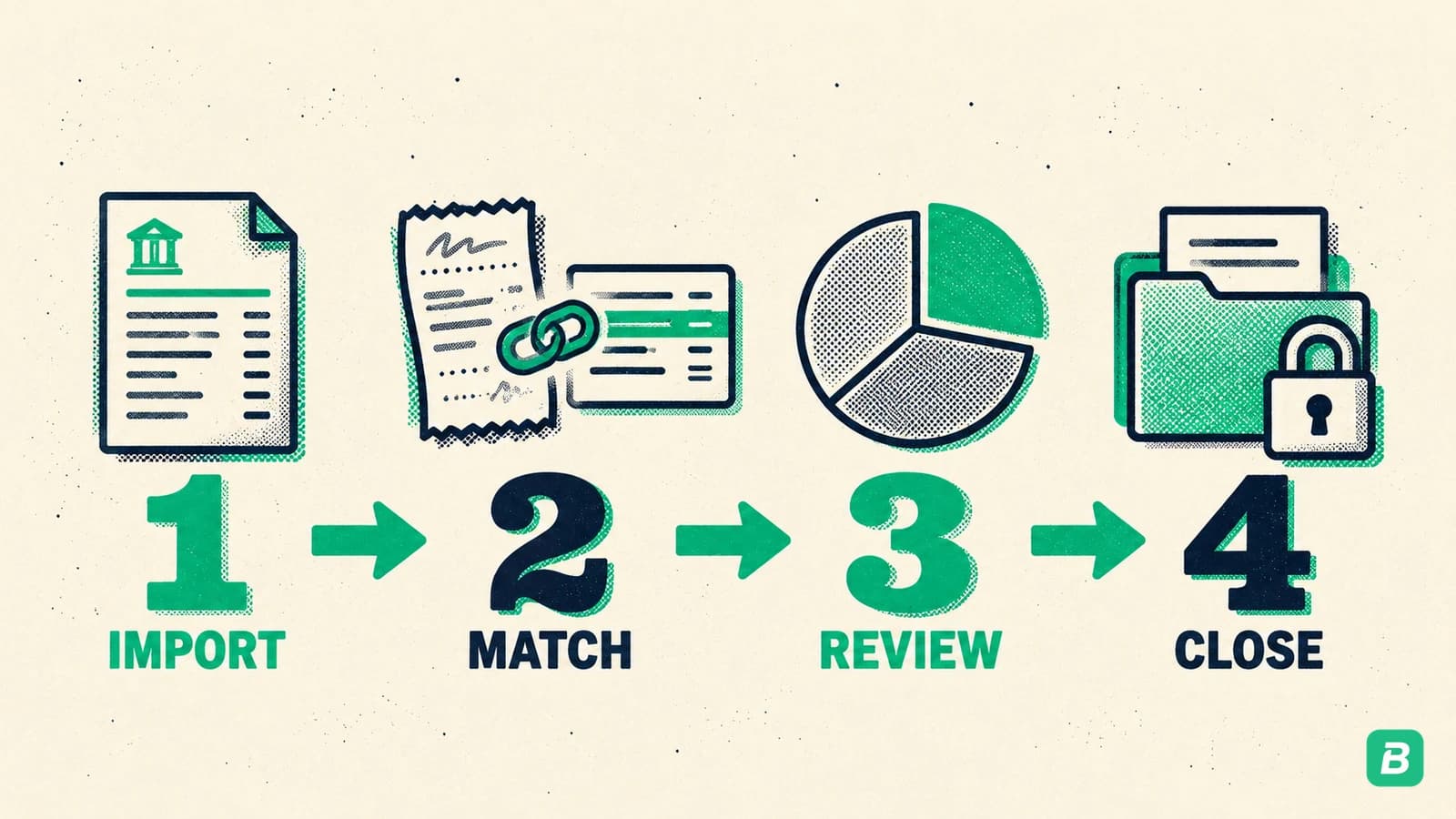
- Import every bank and card statement for the month.
- Match each line to its receipt or invoice.
- Review what's left over: charges with no receipt, receipts with no charge.
- Close the month so nobody edits it later by accident.
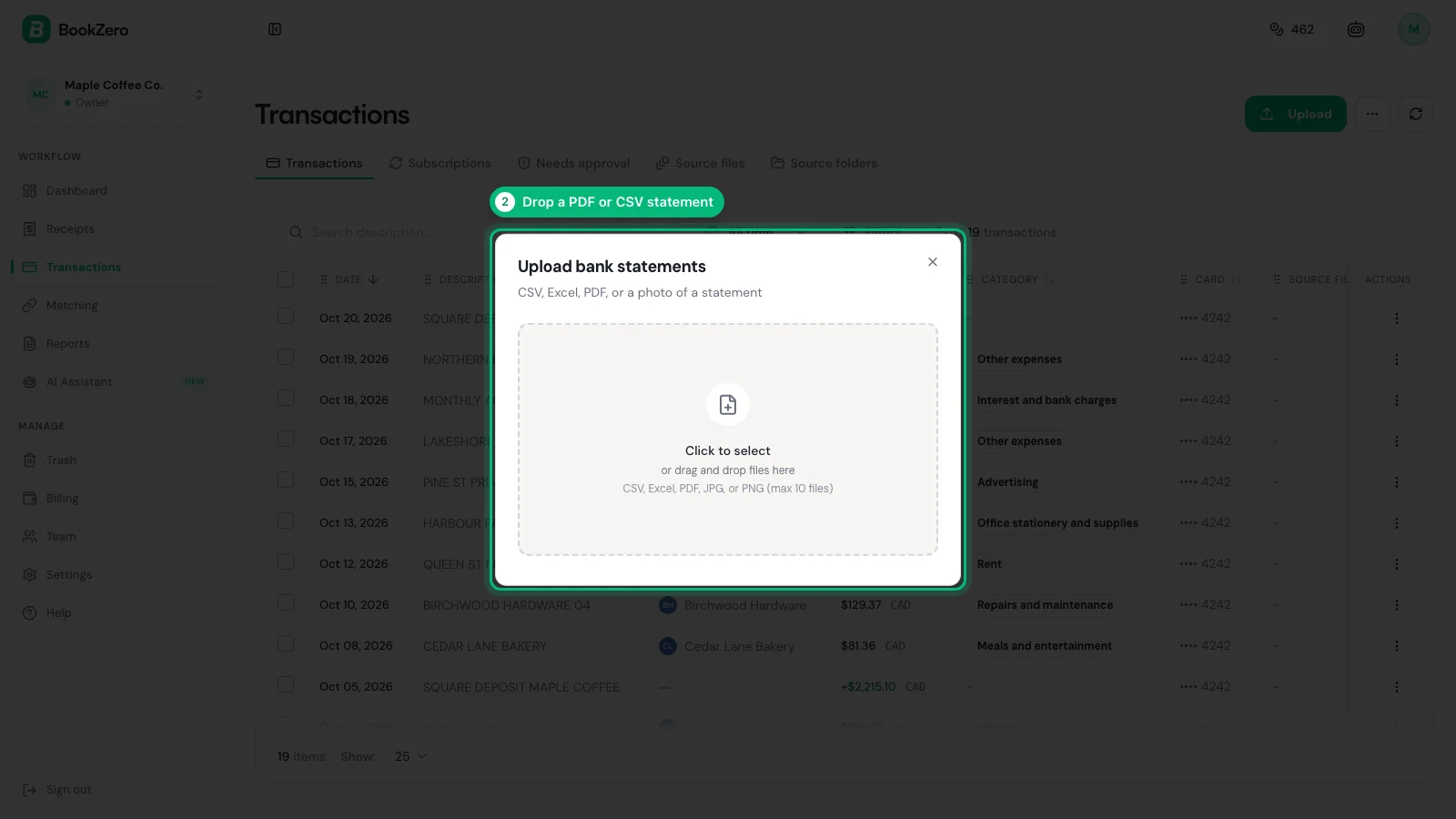
Card statements count too. Our guide to reading a credit card statement covers what each section means and why the statement alone isn't proof of the expense.
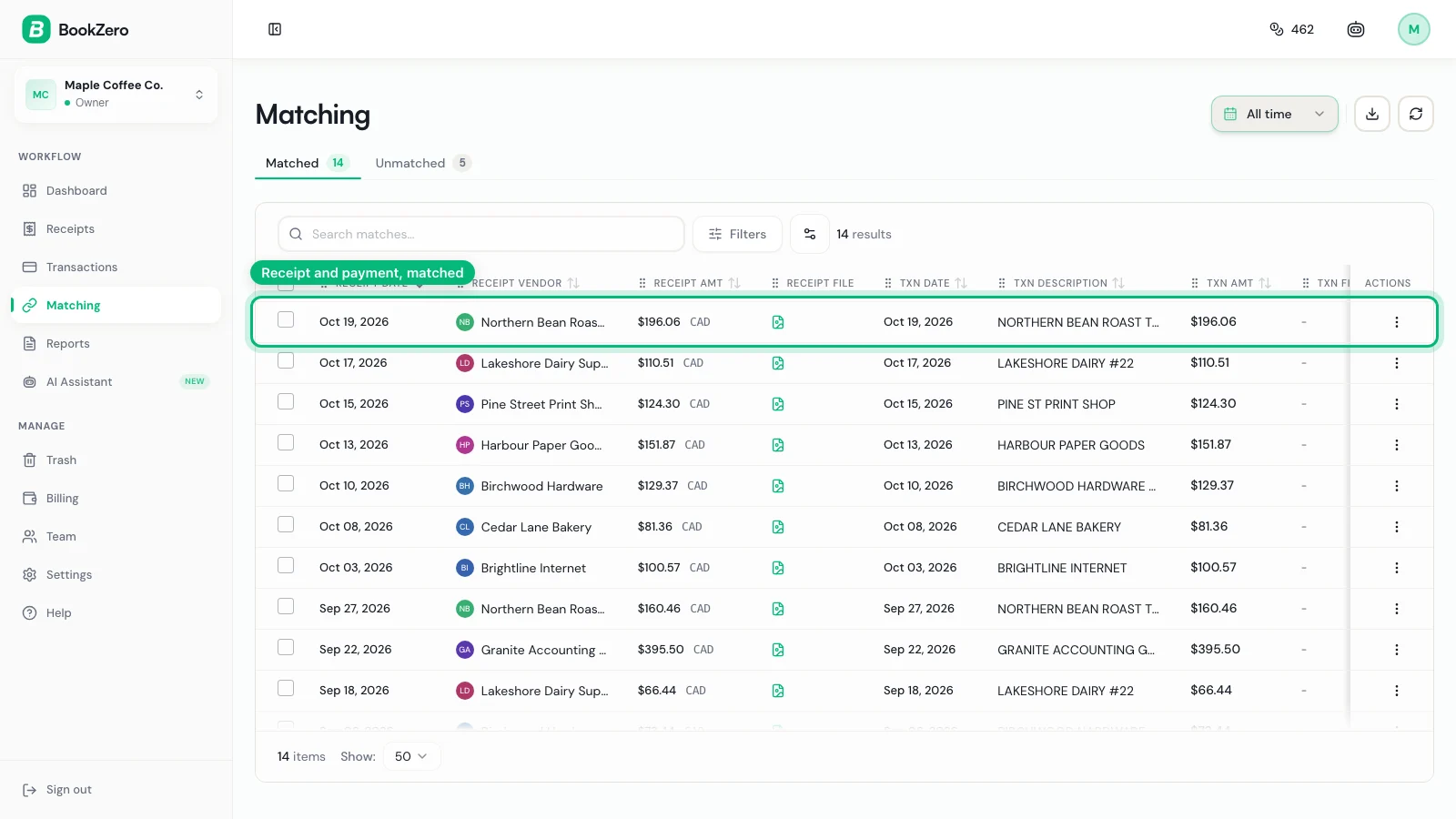
A charge with no receipt is the one an auditor asks about. Chase it while the month is fresh. Store receipts are easiest to find in the first few weeks; see how to get Home Depot receipts or Apple receipts for two common ones.


Step 6: Track contractors, payroll and sales tax
Contractors. If you pay a freelancer for business work, you may owe them a Form 1099-NEC. The IRS 1099-NEC FAQ sets the threshold at payments totaling $600, or $2,000 for payments made after December 31, 2025, in the calendar year. Collect a W-9 before the first payment so you have their details in January.
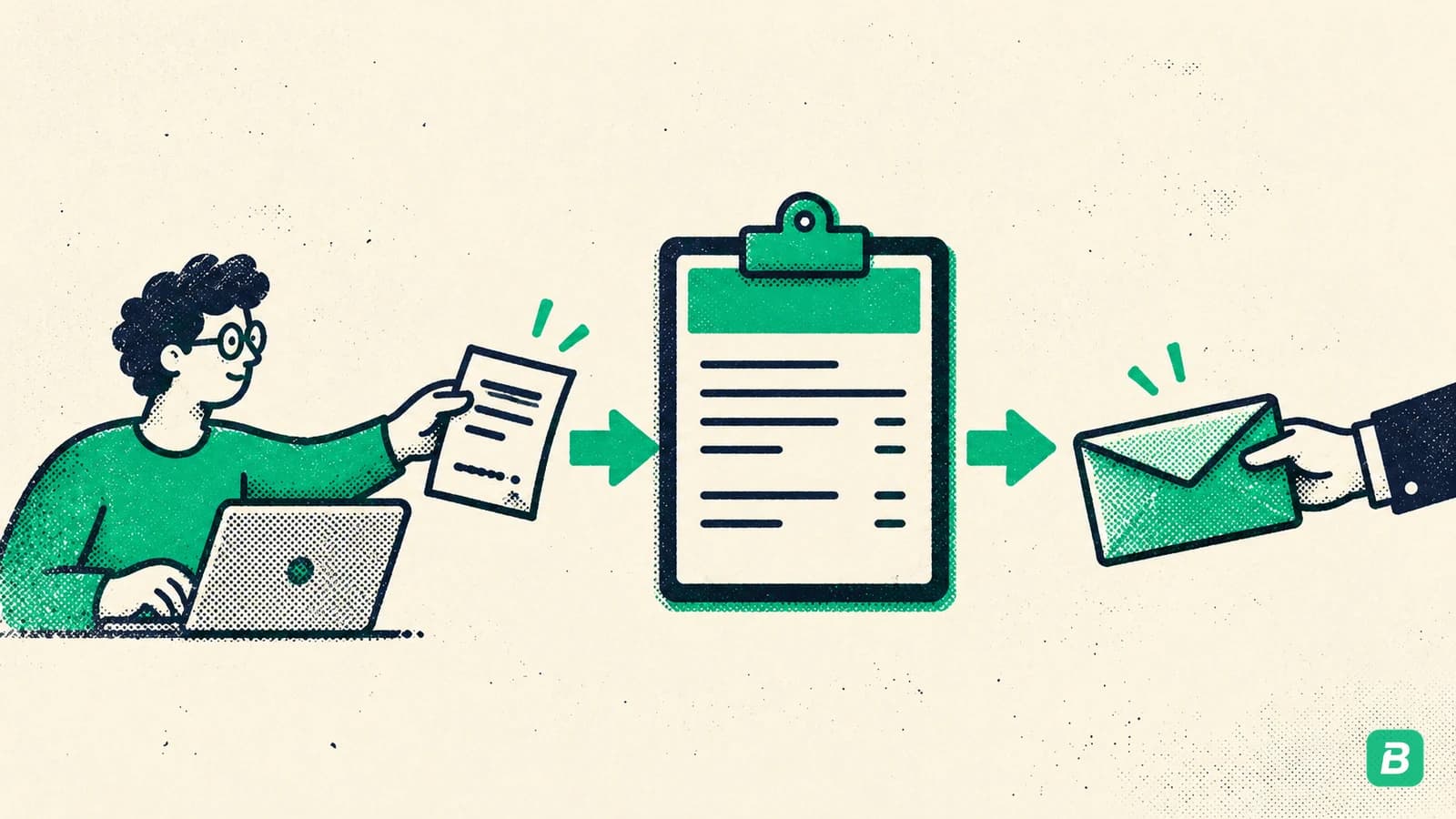
Payroll. Employees bring withholding, payroll tax deposits and quarterly filings. Most small businesses hand this to a payroll service. The IRS says to keep employment tax records for at least 4 years, longer than most other records.
Sales tax. Rules are set by each state, not the IRS. Record the tax you collect apart from your sales so you can file and pay it on your state's schedule.
Step 7: Keep records ready for tax time
How long to keep the books, from the IRS records page:
| Situation | Keep for |
|---|---|
| Most records | 3 years |
| Employment tax records | 4 years |
| Income left off worth more than 25% of what you reported | 6 years |
| A bad debt or worthless securities claim | 7 years |
| No return filed | Indefinitely |
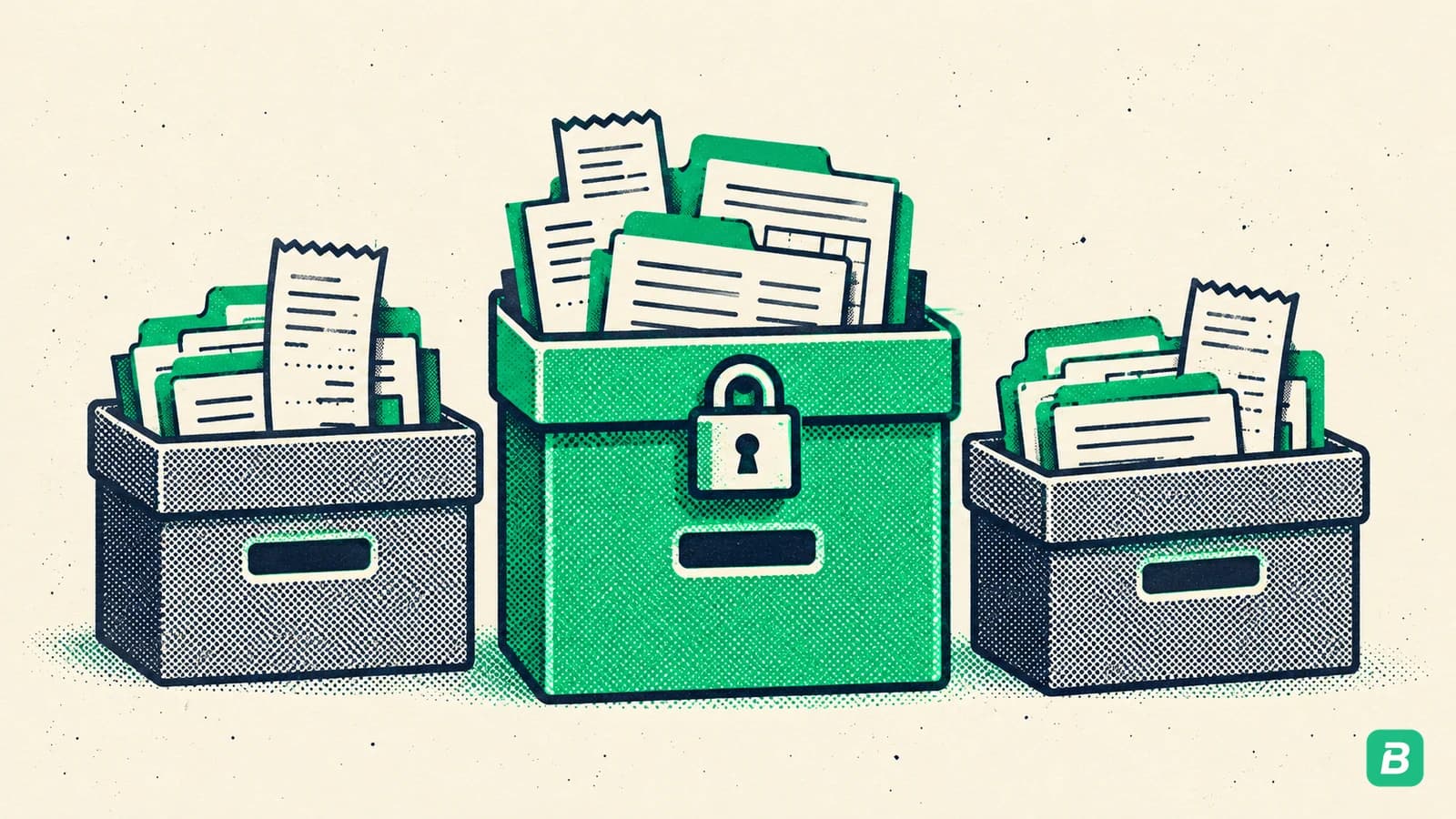
If your profit means you'll owe $1,000 or more, the IRS estimated tax page says you generally pay quarterly. Monthly books make the quarterly number a lookup, not a weekend.
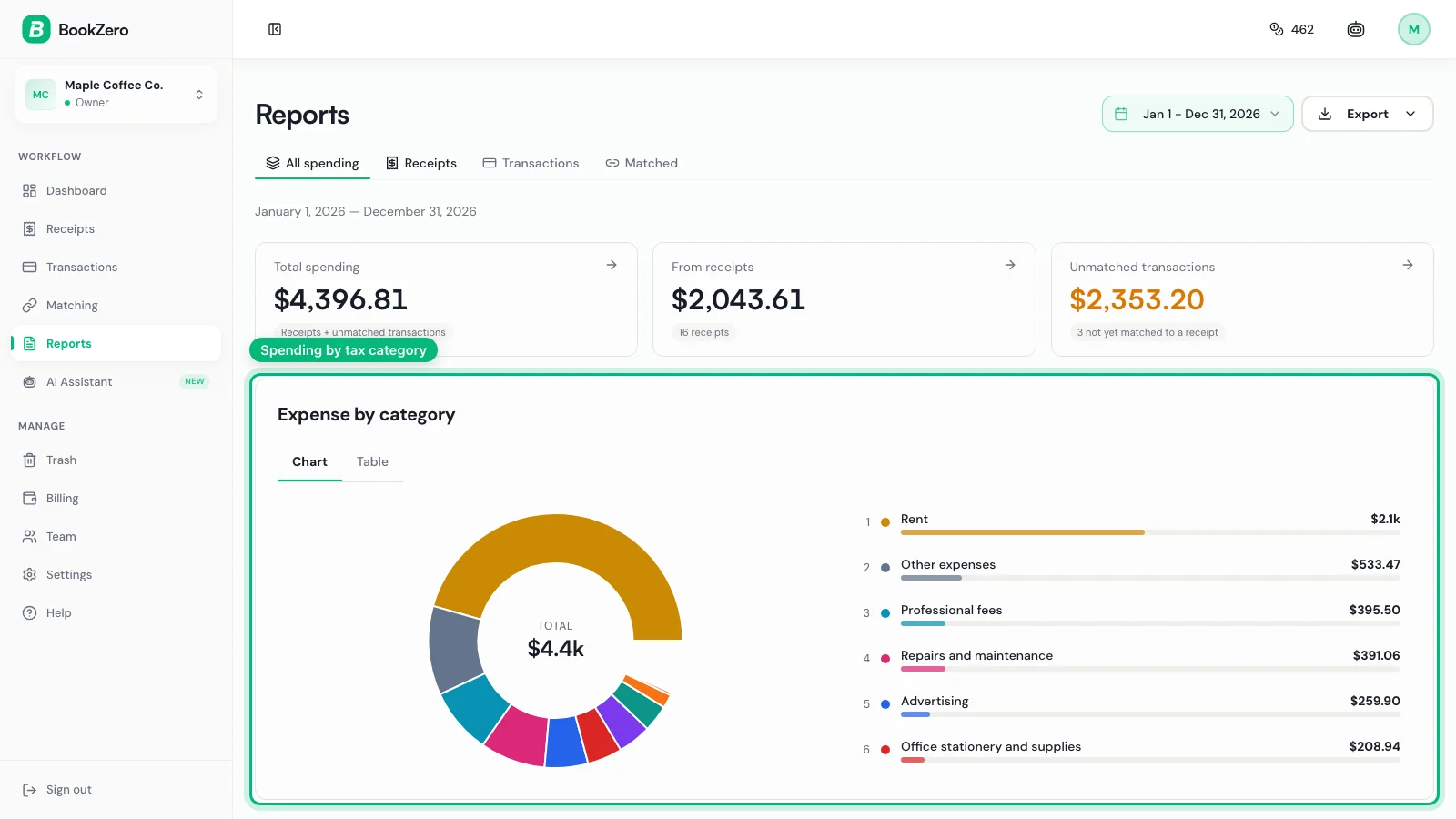
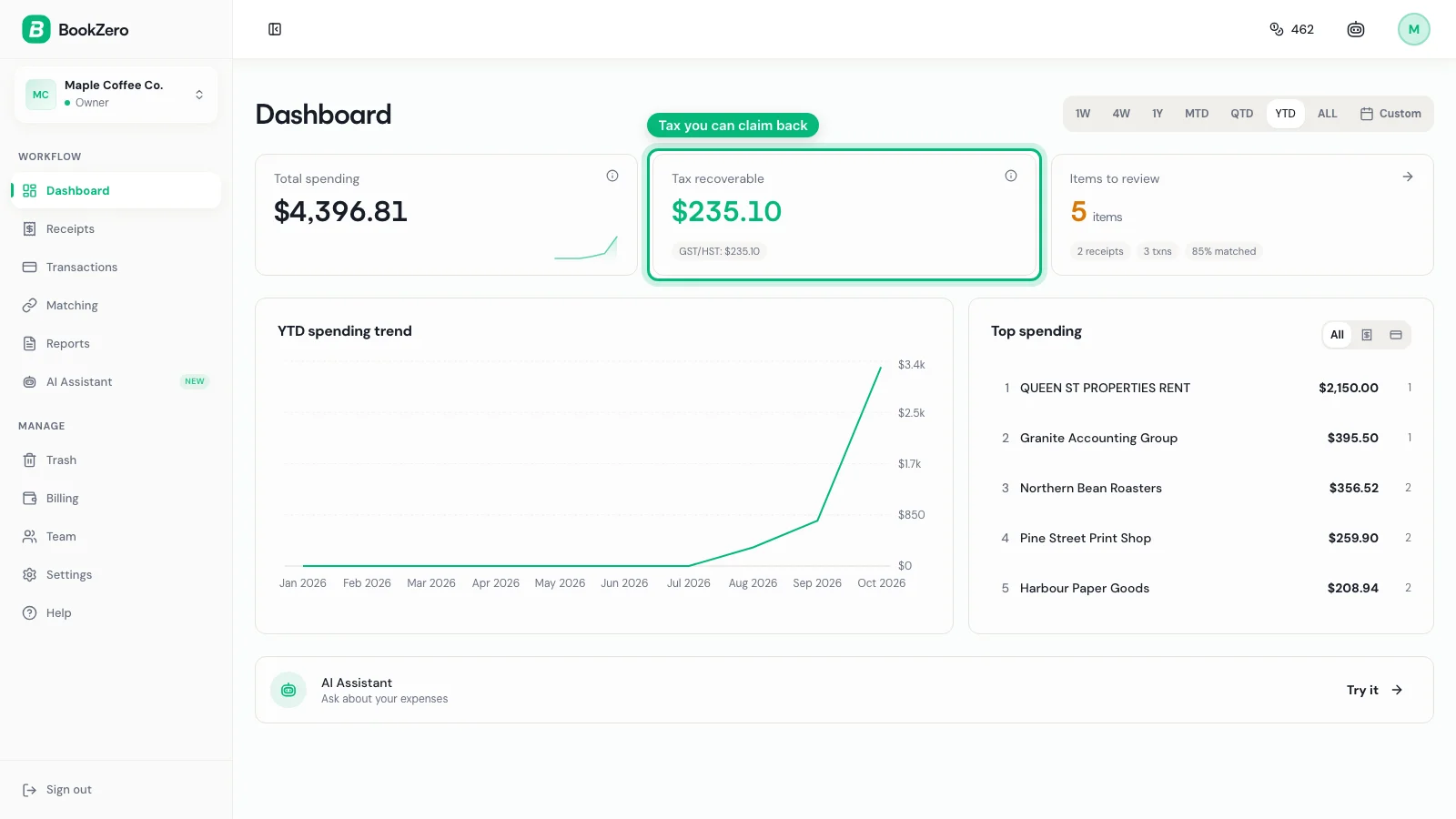
In BookZero, statement import and matching come with every plan; the Schedule C tax report starts on Growth. Plans are on the features page.
Running a business in Canada? The CRA asks you to keep records for six years from the end of the tax year they relate to, and costs go on the T2125 lines instead of Schedule C. Our Canadian bookkeeping guide covers the differences.
Frequently Asked Questions
What is small business bookkeeping?
It is the ongoing record of a business's sales and costs, with a receipt or invoice behind each one, checked against the bank and card statements every month. It gives the owner a profit figure and gives the tax preparer clean totals.
Can I do my own small business bookkeeping?
Yes. With one business account, a category list based on your tax form and a monthly match against the bank, most owners can keep their own books. Many use software for the daily work and a preparer once a year.
How much does a bookkeeper cost?
The US Bureau of Labor Statistics put the median pay of bookkeeping, accounting and auditing clerks at 50,670 dollars a year, or 24.36 dollars an hour, in May 2025. A part-time or freelance bookkeeper usually bills by the hour or by the month.
Do small businesses need double-entry bookkeeping?
Not always. A sole proprietor with one account and no inventory can use single entry. A business with loans, inventory, more than one owner or a need for a balance sheet should use double entry.
How often should a small business do bookkeeping?
Capture receipts as you get them and close the books at least once a month by matching every bank and card statement line to its receipt or invoice.
How long should a small business keep its books?
The IRS says 3 years for most records, 4 years for employment tax records, 6 years if more than 25 percent of income was left off, and 7 years for bad debt or worthless securities claims. In Canada the CRA asks for six years.

Eric Tech· Founder, BookZero.ai
Founder of BookZero. Building AI-powered bookkeeping tools for US and Canadian freelancers and small businesses.
View all postsStay ahead of tax season
Tax tips, deduction strategies, and feature announcements straight to your inbox. No spam, unsubscribe anytime.