Schedule C Expenses: Business Expense Categories
Organize US self-employed business expenses for Schedule C, with category examples, common review points, and a receipt-to-report checklist.
 Eric Tech·Oct 20, 2026·6 min read·
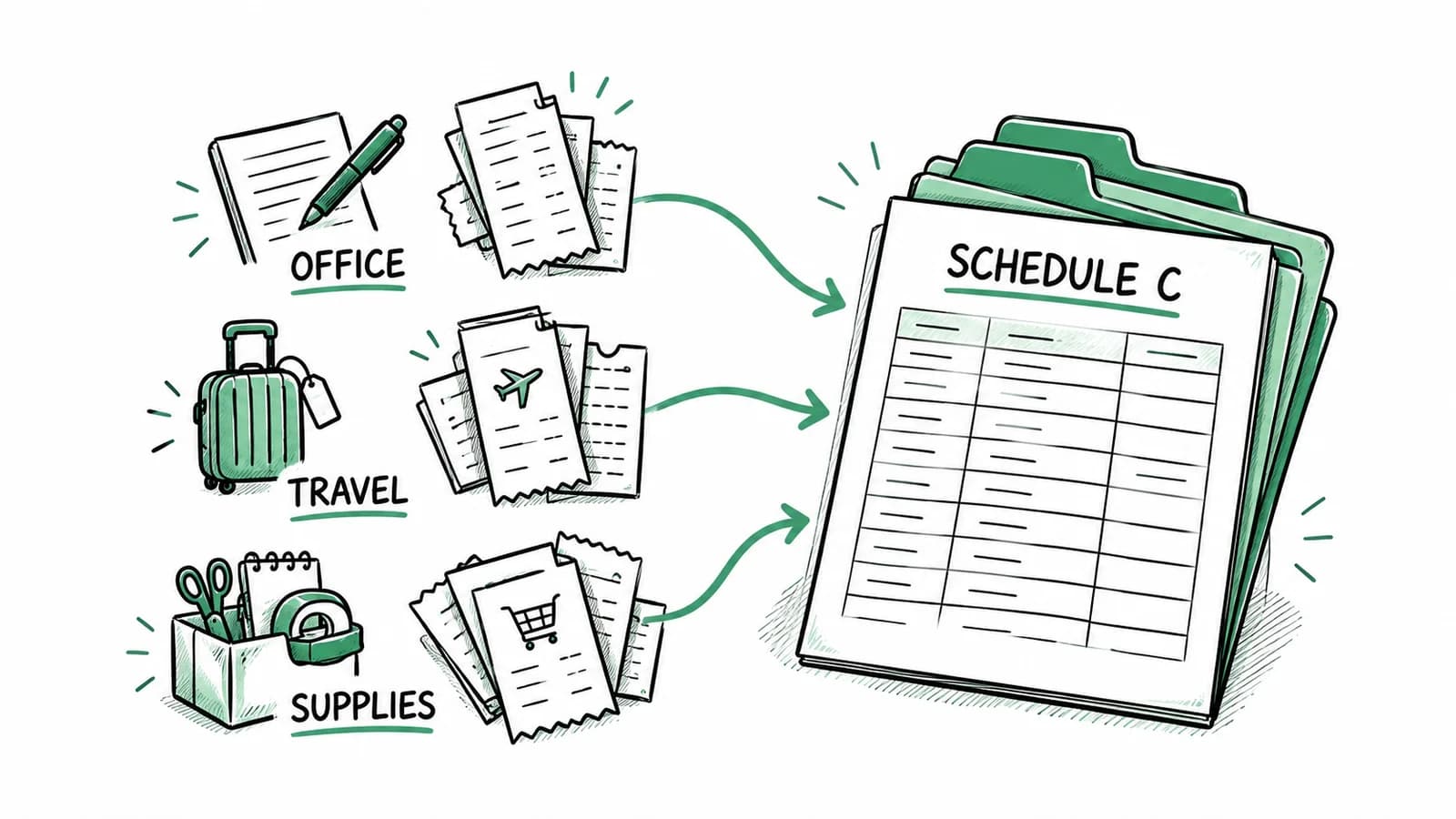
Schedule C expense categories help US sole proprietors organize business costs for their federal income tax return. A useful bookkeeping record connects each amount to a source document and explains why it belongs to the business. The category is part of that record; it does not, by itself, establish a deduction.
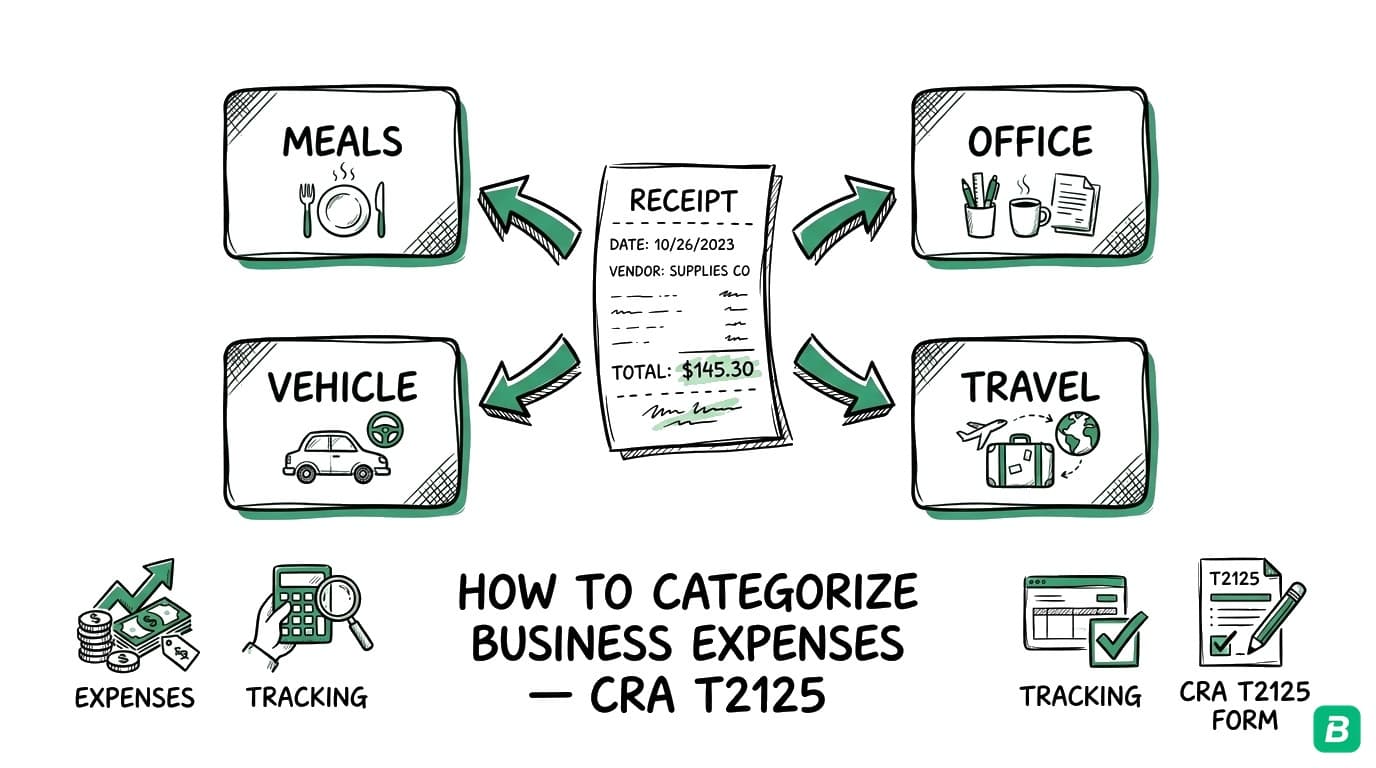
This guide shows a practical way to prepare records for review. The form references below use the 2025 IRS Schedule C instructions, which were available when this guide was written. Check the instructions for the tax year you are filing before assigning final lines. Canadian readers should use the CRA business expense categories guide instead.
Start with the document and business purpose
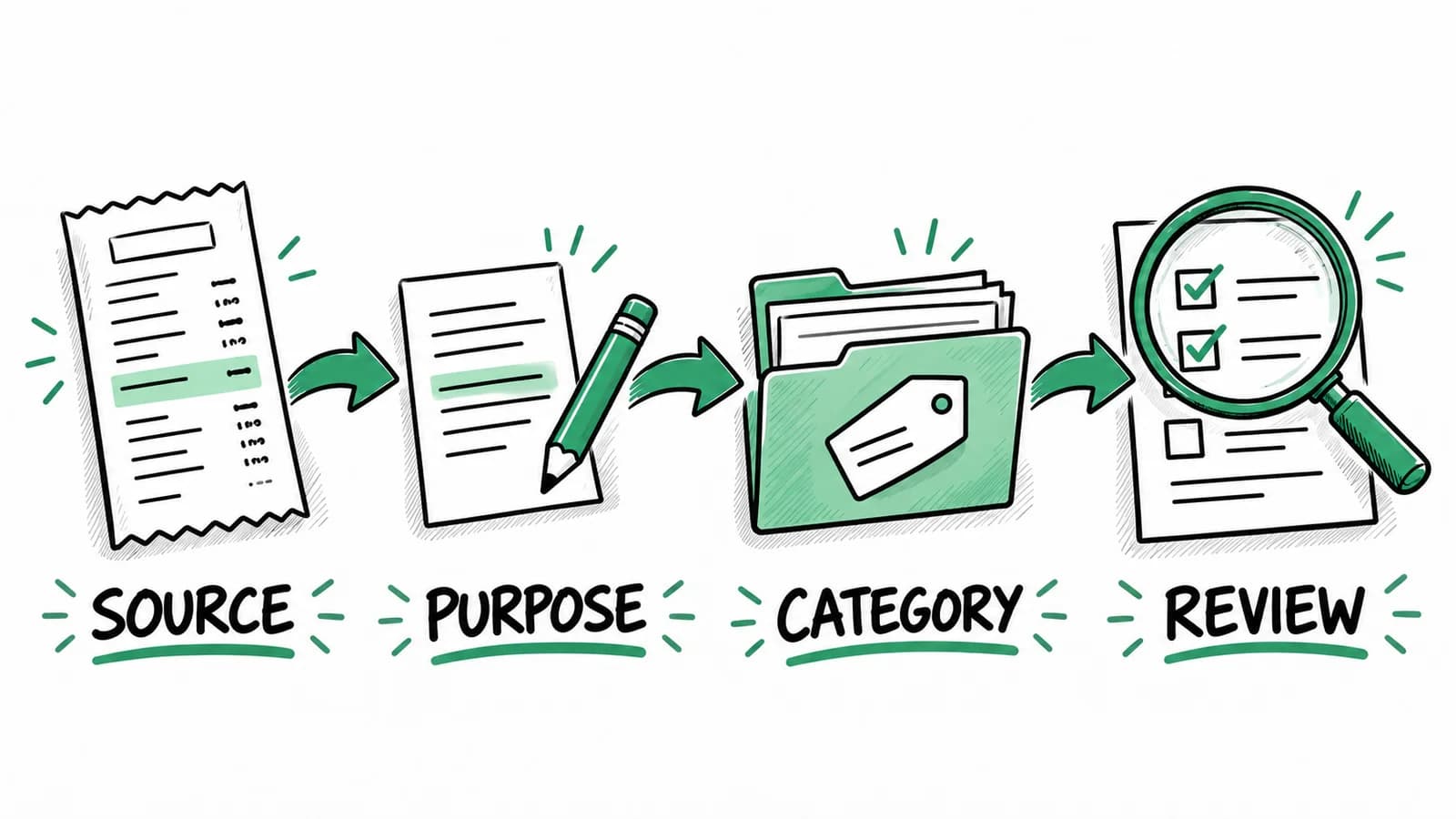
Before choosing a category, record what was purchased, when, the amount, and the reason it was used in the business. Keep the supporting receipt or invoice. The IRS supporting-records guidance describes records that substantiate purchases and expenses.
A statement entry for an online retailer does not identify the items in the order. Open the invoice before deciding whether it was office supplies, equipment, or a personal purchase. If one invoice contains several kinds of items, preserve the breakdown so your tax preparer can review the treatment.
Common business expense categories
These examples are starting points for organizing records, not a complete list of deductions or a conclusion about an individual purchase. The labels match BookZero's US categories; some are shortened versions of form headings.
| Bookkeeping category | Example to collect for review |
|---|---|
| Advertising | An invoice for a business advertising campaign |
| Contract labor | An invoice from an independent contractor |
| Legal and professional services | A business bookkeeping or legal invoice |
| Office expense | Printer ink, paper, or postage |
| Supplies | Materials consumed in providing a service |
| Insurance (other than health) | A business liability policy |
| Repairs and maintenance | A repair to business equipment |
| Travel | A hotel invoice for a business trip |
| Deductible meals | A business meal with purpose and attendee notes |
| Utilities | A phone or internet bill with business-use records |
| Other expenses | An itemized business cost without another applicable line |
For the 2025 form, Other expenses flows from Part V to line 27b. Do not copy an old spreadsheet's line numbering without checking the year. Separately flag purchases that may need depreciation or section 179 review.
Expenses that need extra care
Meals and entertainment
Keep the receipt and a note explaining the business context. Eligible business meals are generally subject to a 50% limit; exceptions and eligibility rules matter. Entertainment is generally nondeductible, and separately purchased or stated food can require its own analysis. The IRS travel, gift, and car expense publication explains those distinctions.
Do not group a restaurant receipt and an event ticket together simply because they occurred on the same outing. Preserve the separate charges so the review can reach the correct result.
Vehicle costs
Track business mileage and keep vehicle records. The choice between the standard mileage and actual-expense methods affects which costs can be claimed. Do not add fuel and routine vehicle operating costs on top of the standard mileage deduction. Business parking and tolls have separate rules. Use IRS Publication 463 with your tax preparer to decide the method and supporting records.
Home office costs
Working from home does not automatically make every household bill a Schedule C expense. Eligibility, the space used, and the calculation method matter. Keep home-related records in a separate review group and use the IRS business-use-of-home guidance to check the conditions. Avoid counting the same home cost again in ordinary rent or utilities totals.
Equipment and mixed-use purchases
A laptop can need a different treatment from printer paper. Flag equipment for review before including its entire price in current expenses. For a purchase used personally as well as for work, keep the basis for the business portion. Ask your preparer which treatment and elections apply; a retailer name or price alone cannot decide it.
A worked bookkeeping example
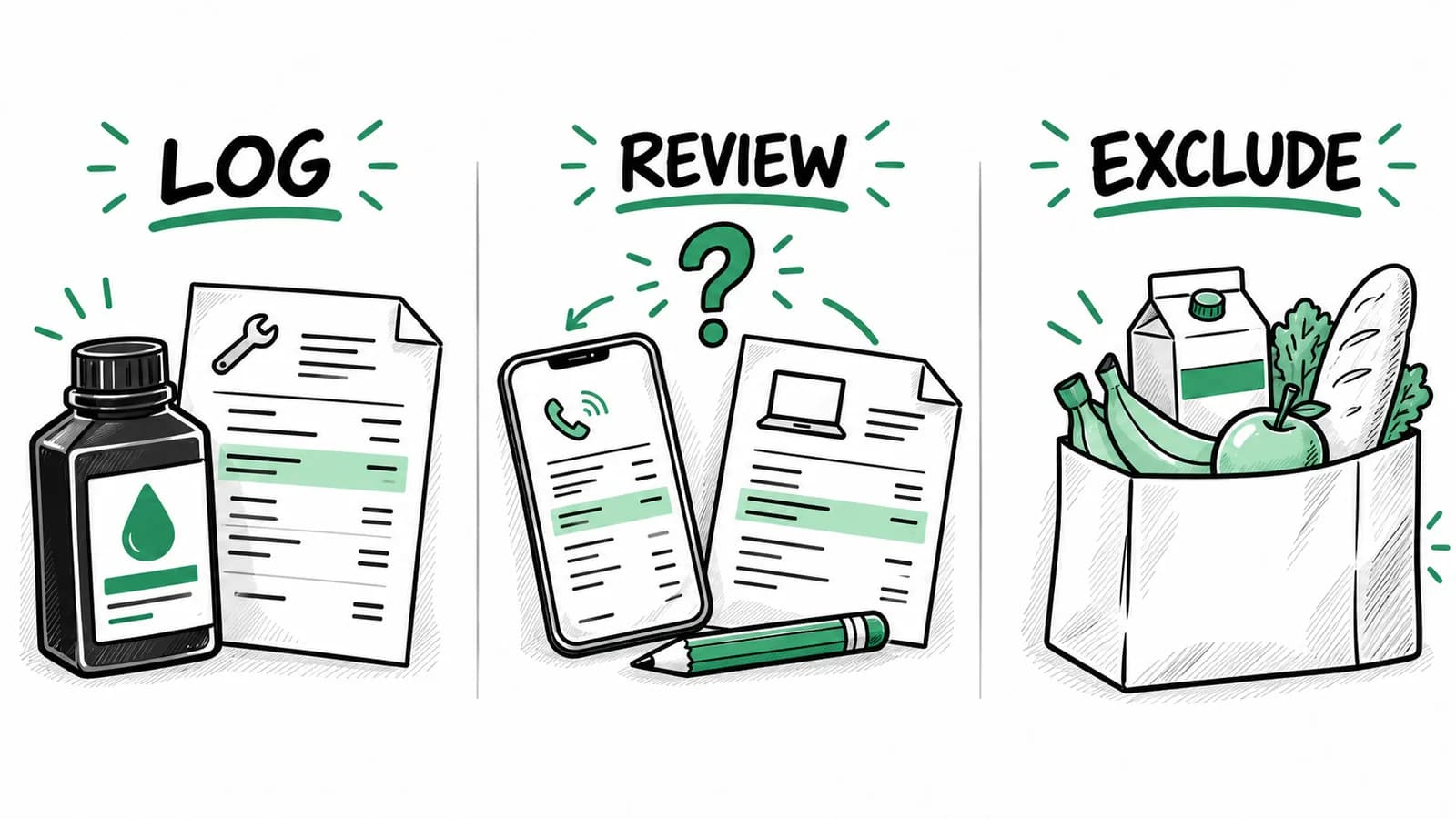
Imagine a freelance editor collects these records for October:
- $40 for printer ink, with a receipt showing only business supplies.
- $300 paid to another freelancer, supported by an invoice describing the work.
- A $100 phone bill used partly for business.
- A $1,400 laptop invoice.
- $75 for groceries for the editor's household.
The ink can enter Office expense for review and the freelancer invoice can enter Contract labor. Keep the phone bill with the documented business-use allocation. Flag the laptop for equipment treatment. Exclude the personal groceries from business expense totals. This is an organization example, not a calculation of the final tax deduction.
Prepare a reviewable report in BookZero
Select the correct US business context, upload receipts, and review the extracted information and suggested categories. Import bank statements and check receipt-to-transaction matches to find missing documents. Check refunds and duplicates before generating reports or exporting records.
BookZero includes US category reporting and CSV or Excel exports, with features and allowances depending on your plan. Compare the feature overview with your accountant's required handoff. Keep unresolved tax questions visible instead of choosing a category merely to make the report look complete.
Before handing over a period, check that each expense has a readable source, personal spending is excluded, mixed-use items are explained, and equipment is flagged. Review the report against the filing year's instructions with your tax preparer. BookZero helps organize the evidence; tax filing and final deduction decisions remain a separate step.



Eric Tech· Founder, BookZero.ai
Founder of BookZero. Building AI-powered bookkeeping tools for US and Canadian freelancers and small businesses.
View all postsStay ahead of tax season
Tax tips, deduction strategies, and feature announcements straight to your inbox. No spam, unsubscribe anytime.