Small Company Bookkeeping: A Simple US Guide for 2026
Small company bookkeeping for US owners: separate accounts, pick cash or accrual, sort by Schedule C line, match monthly and set aside quarterly tax.
 Eric Tech·Oct 21, 2026·7 min read·
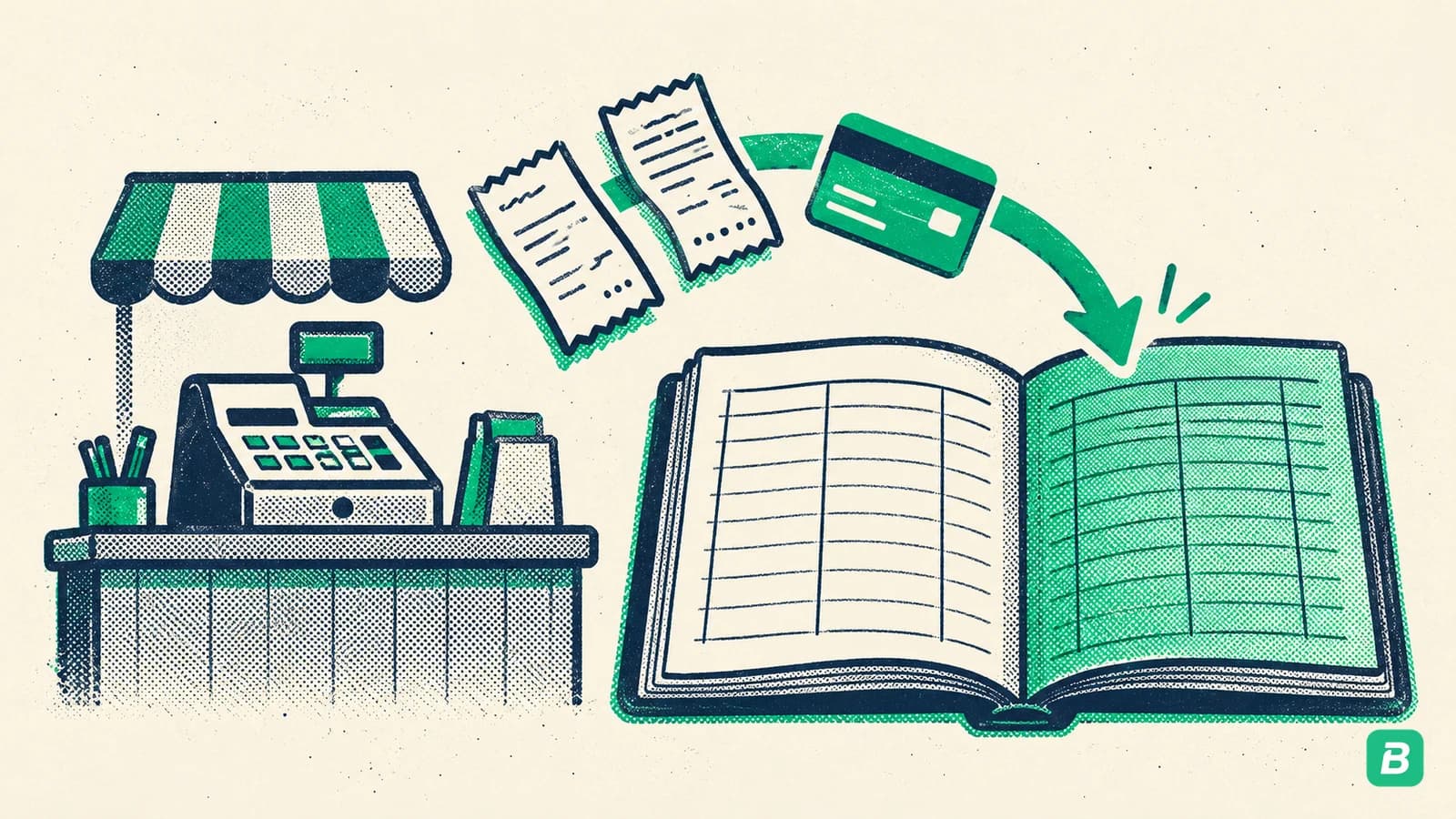
Small company bookkeeping is recording every sale and every purchase, with proof, so you know where the money went and can file without a scramble. For a US owner that means five habits: a separate business account, one accounting method, receipts kept, costs sorted by Schedule C line, and a monthly match against the bank.
Keep business money in its own account, match it to receipts every month, and set tax aside each quarter.
Jump to:
- Step 1: Separate accounts
- Step 2: Cash or accrual
- Step 3: Records to keep
- Step 4: Categories
- Step 5: Monthly routine
- Step 6: Quarterly tax
- FAQ
Step 1: Separate business and personal money
Open a business checking account and a business card before your first sale. IRS Publication 583 says it plainly: keep your business account separate from your personal checking account.
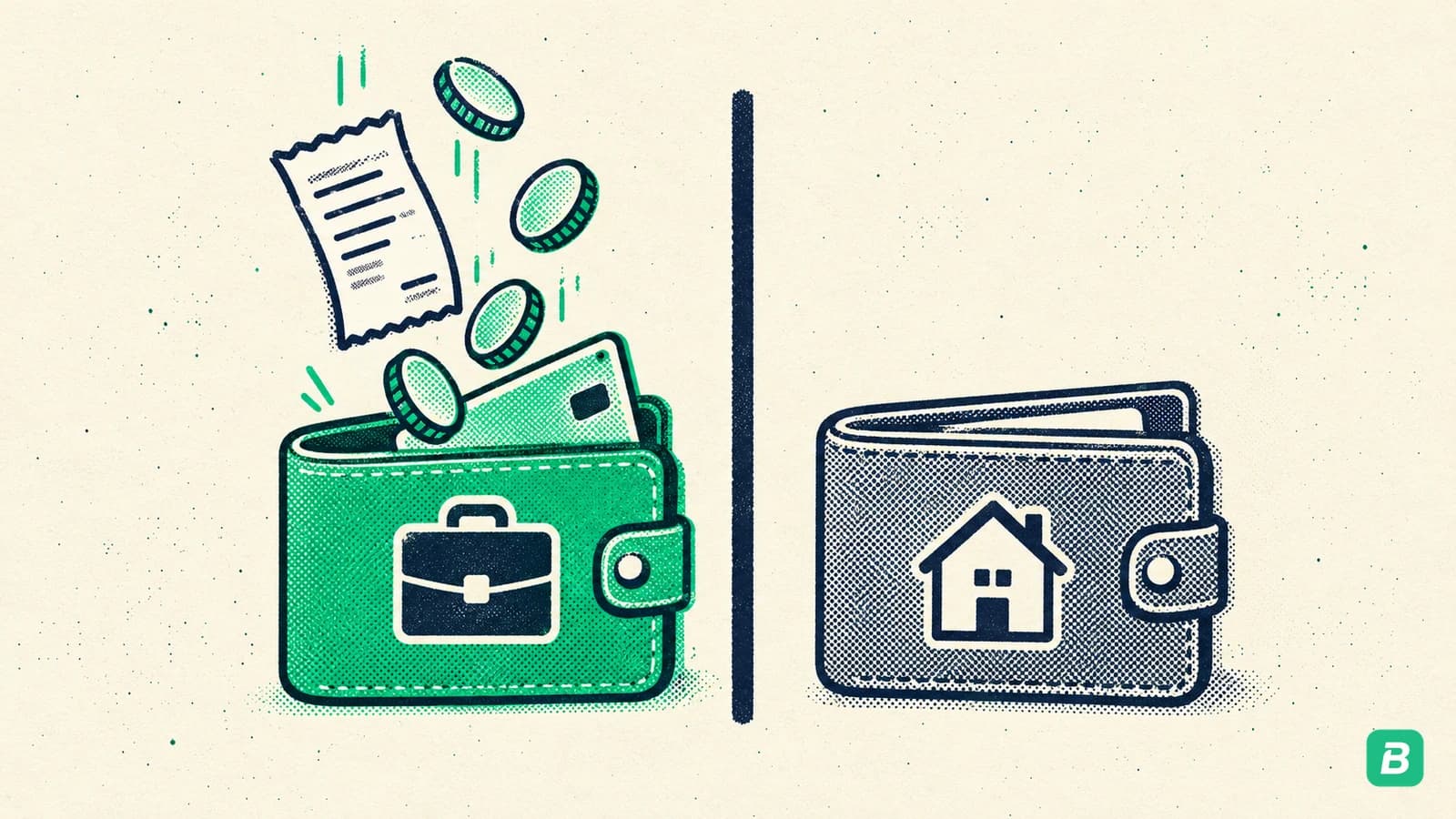
One account means every line on the statement is a business line. A mixed account turns month end into a hunt through groceries and streaming bills.
If a personal card paid for a business cost, keep the receipt and note it. Then stop doing it.
Step 2: Choose cash or accrual
Your accounting method decides when income and costs count. IRS Publication 538 defines both:
| Method | Income counts when | Costs count when | Good for |
|---|---|---|---|
| Cash | You receive it | You pay them | Most service businesses and freelancers |
| Accrual | You earn it | You incur them | Companies with inventory or many unpaid invoices |
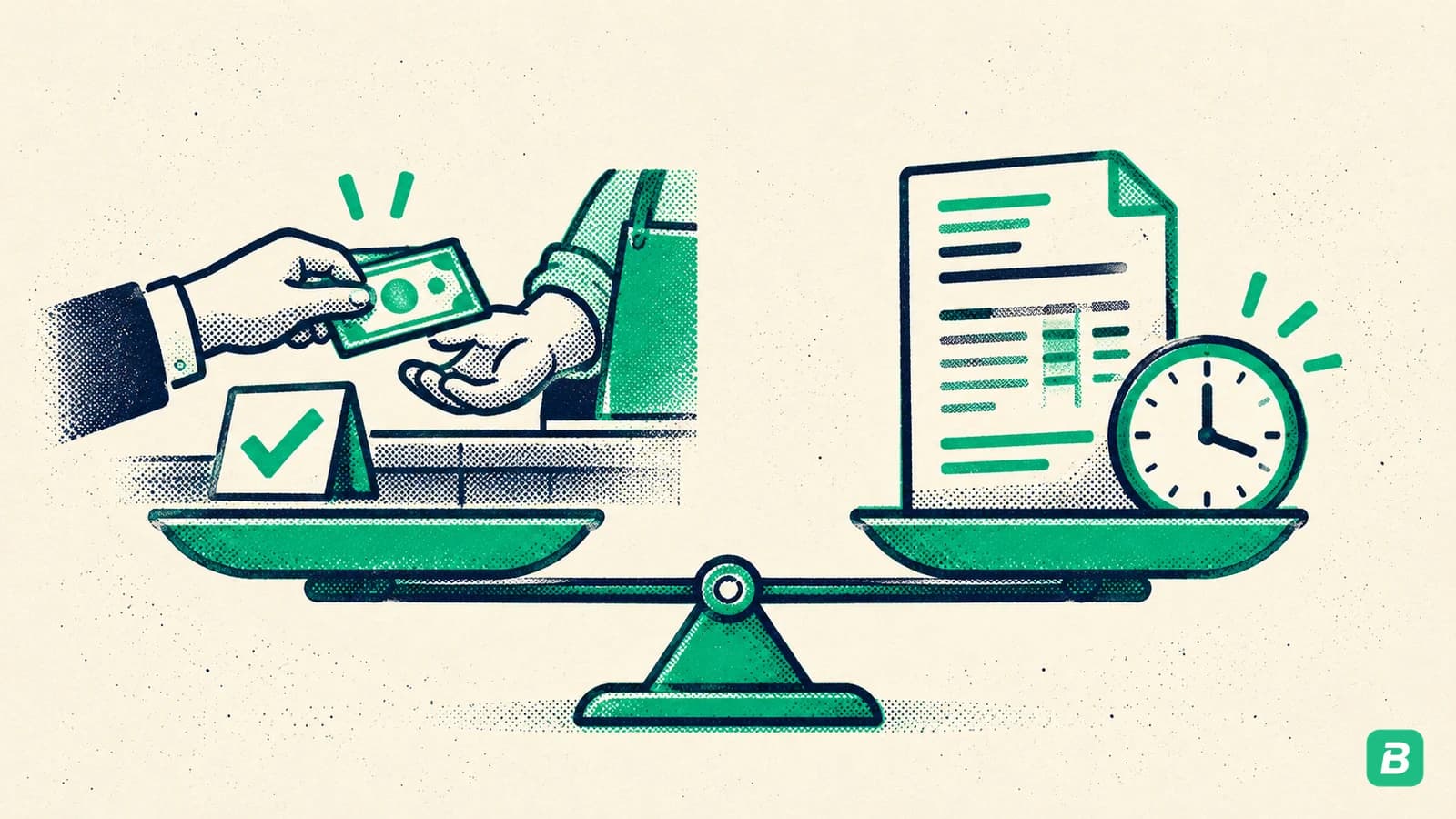
Pick one and use it every year. Changing methods later generally needs IRS approval, so ask your preparer before you switch.
Step 3: Keep the records the IRS asks for
Publication 583 lists why records matter. Good books help you:
- Monitor the progress of your business
- Prepare financial statements and tax returns
- Identify the source of each receipt
- Keep track of deductible expenses
- Support items reported on your return
That last one is the audit line. Every cost needs a receipt or invoice showing what, when, how much and who you paid.
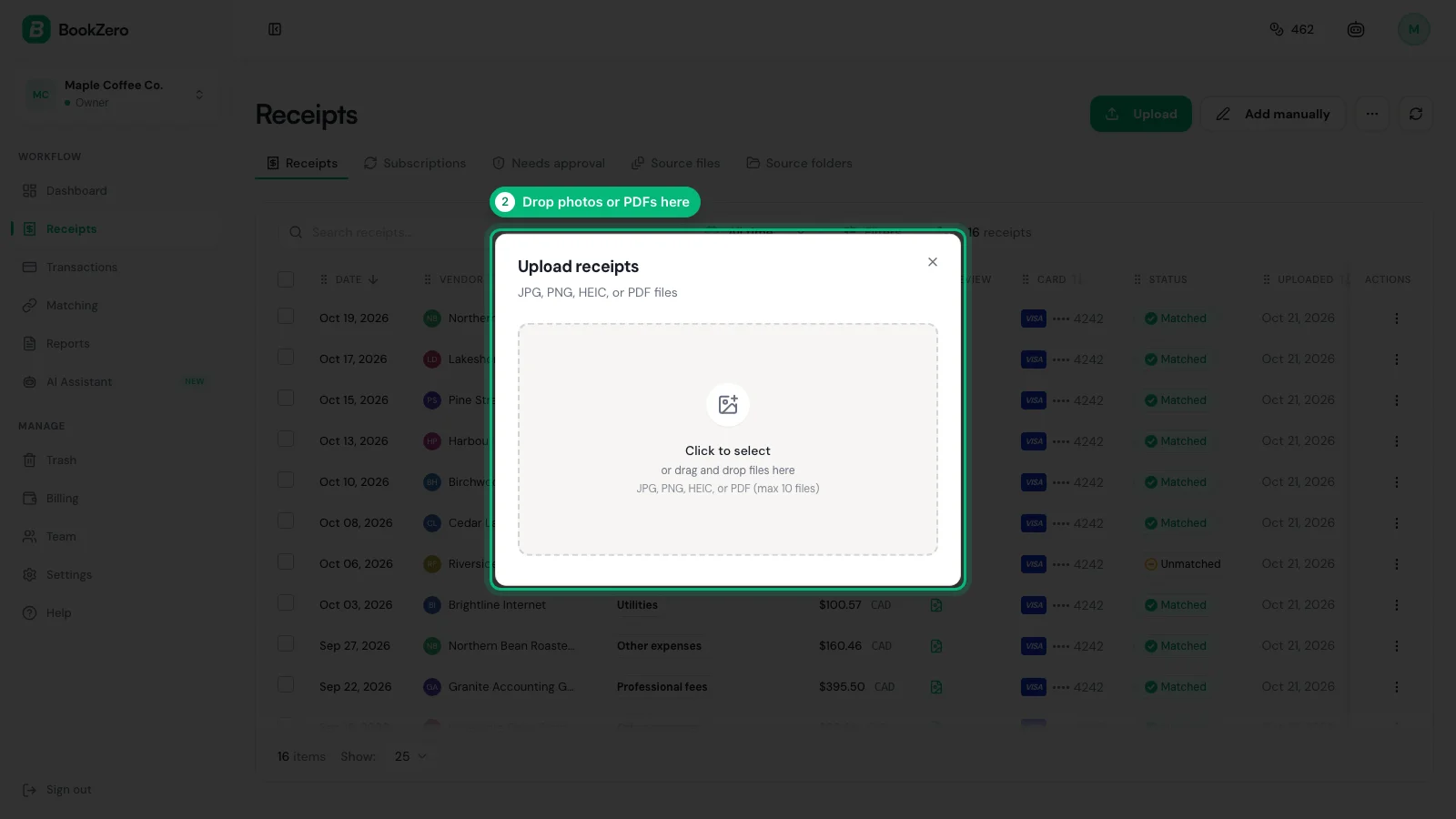
How long to keep them, per the IRS records page:
- 3 years in most cases
- 4 years for employment tax records
- 6 years if you left out income over 25% of what you reported
- 7 years for a bad debt or worthless securities claim
Throwing receipts out after you file is the costly mistake. The review window is still open.
Step 4: Sort costs by Schedule C line
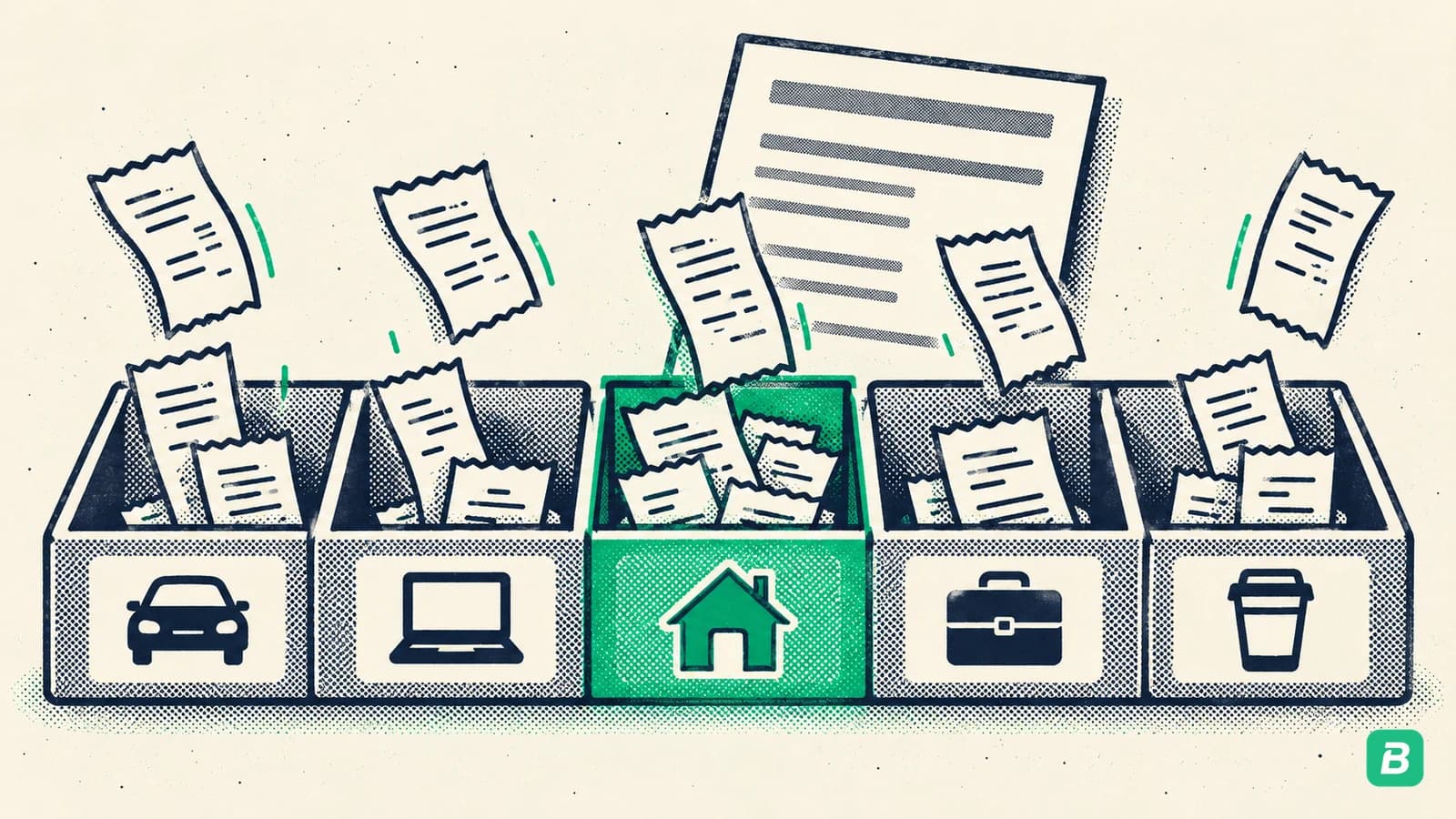
A sole proprietor or single-member LLC reports costs on Schedule C, so use its lines as your categories: Advertising, Office expense, Supplies, Travel, Utilities and the rest. Our business expense categories list has all 23 with examples.
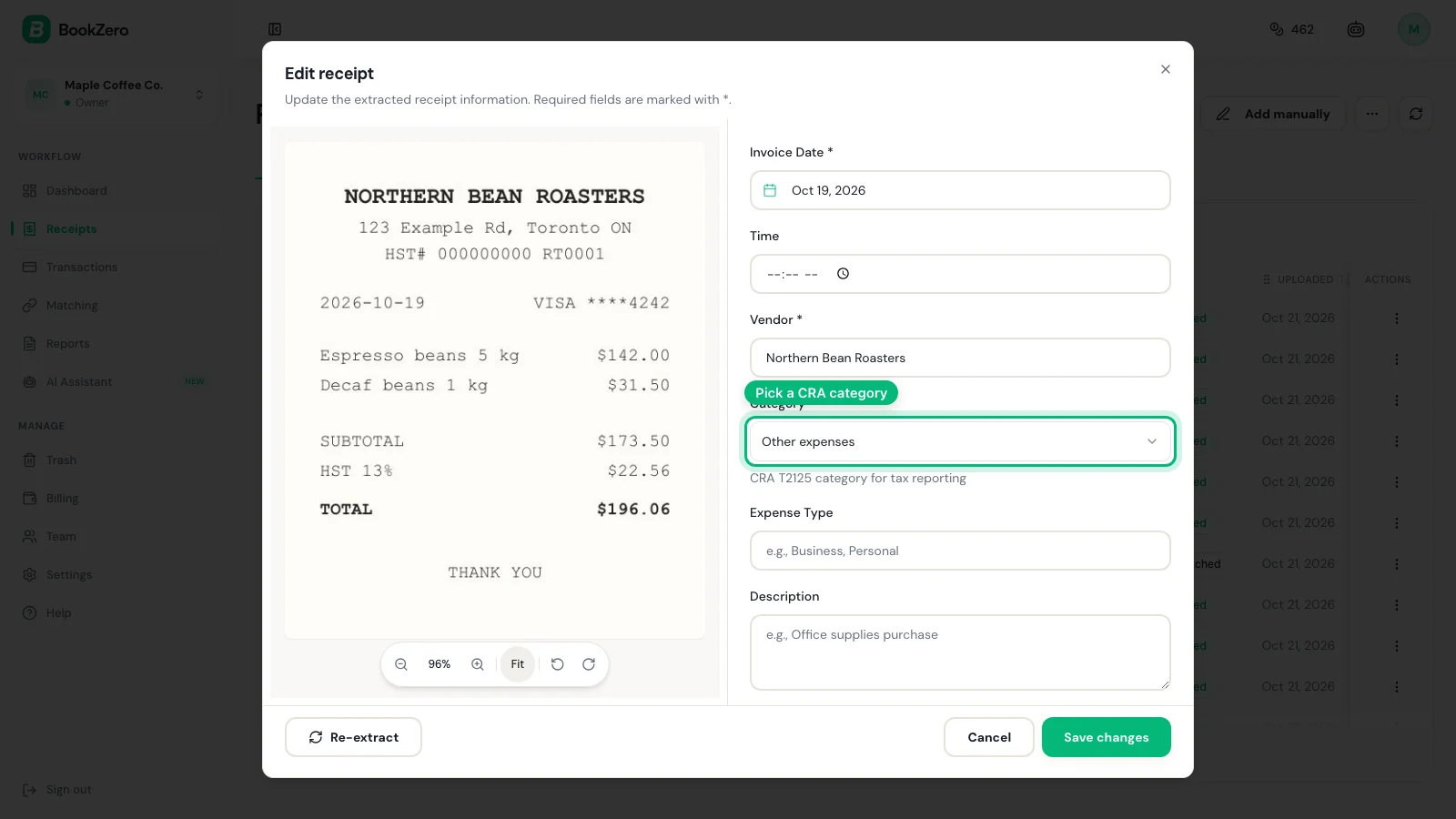
Use the IRS names from day one. A custom list has to be mapped back to form lines at tax time, and that is where mistakes creep in.
Partnerships and corporations file other returns with their own lines. Ask your preparer which form your company uses before you build a list.
Step 5: Run a monthly routine
Weekly is better, monthly is the minimum. Four steps:
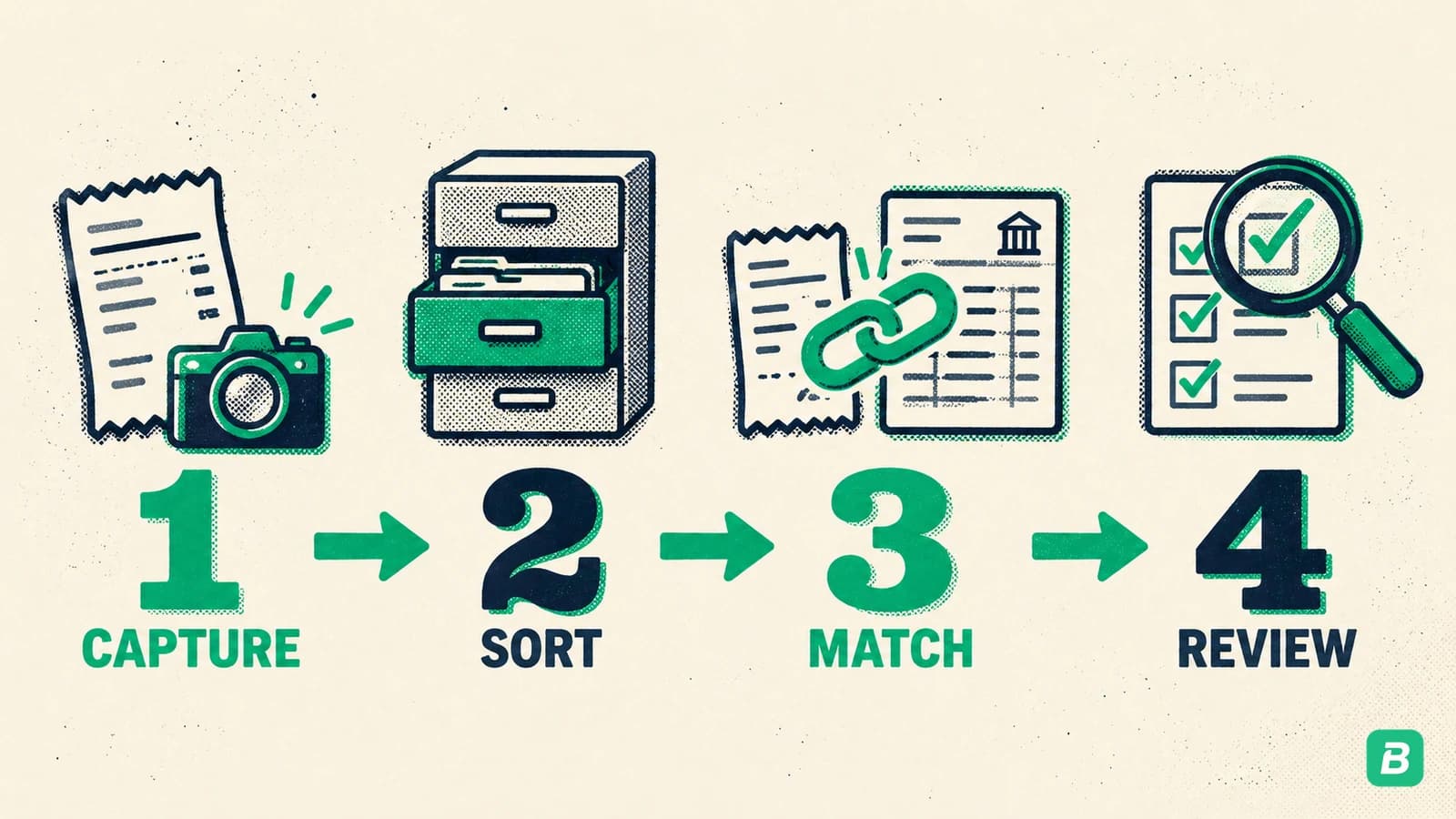
- Capture every receipt and invoice the day you get it.
- Sort each one into its category.
- Match each receipt to its charge on the bank or card statement.
- Review what's left: charges with no receipt, receipts with no charge.
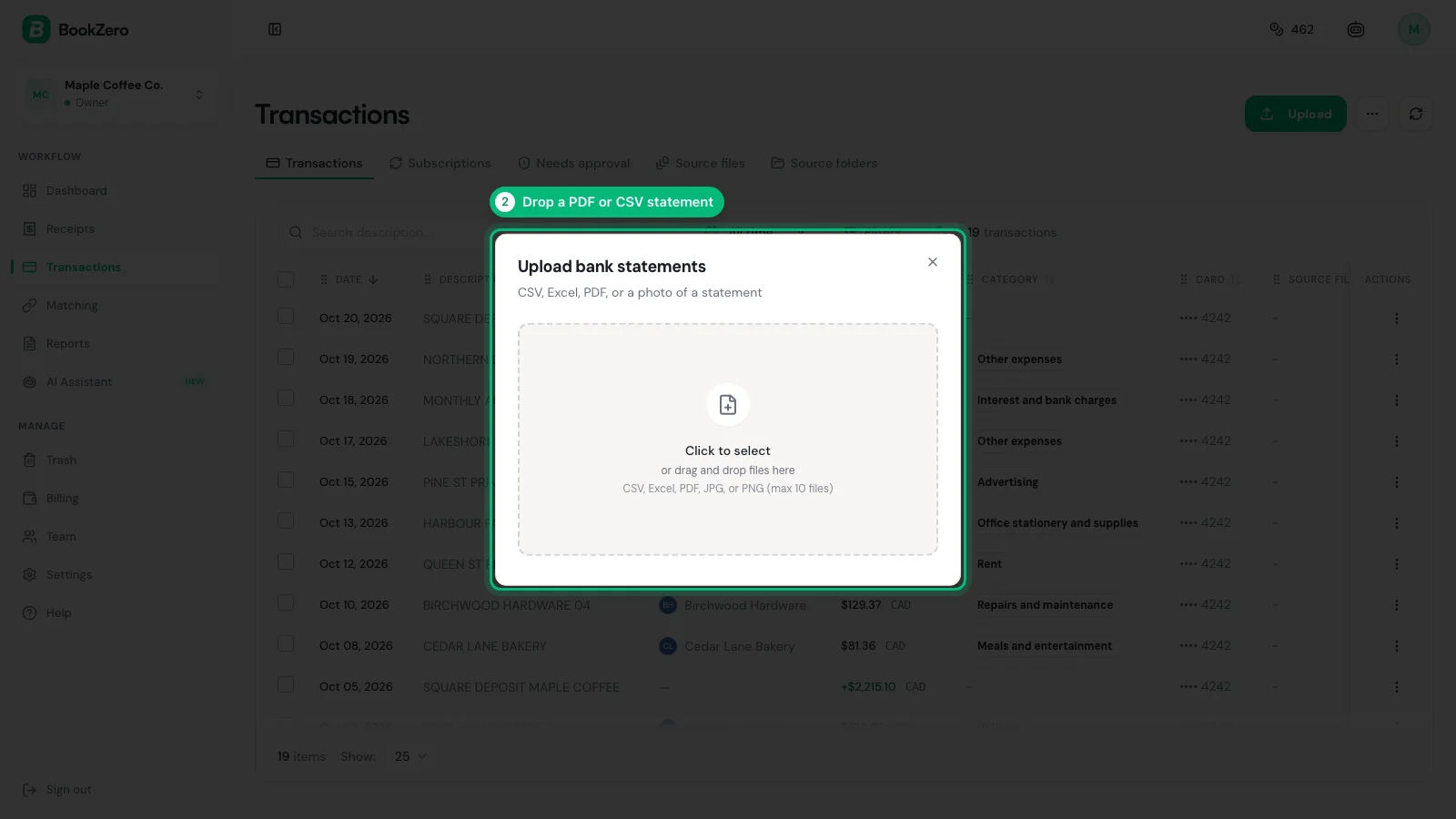
Matching is where small company bookkeeping catches problems. A charge with no receipt needs one. A receipt with no charge may be a duplicate or a personal card.
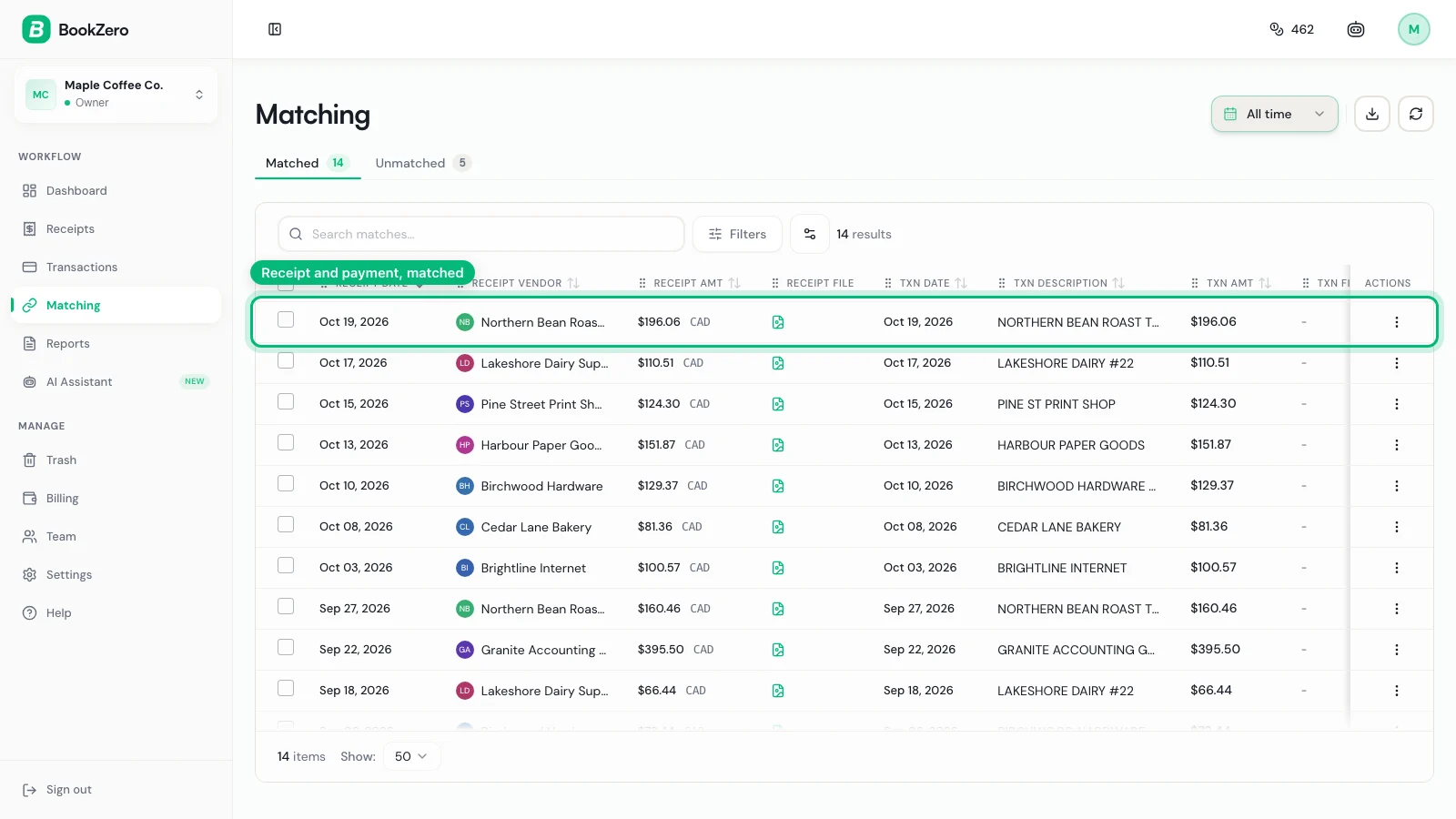
In BookZero, statement import and receipt matching are free on every plan. For the weekly version of this habit, see the best way to track business expenses, and for where the paper goes, the receipt organizer guide.


Step 6: Set aside quarterly estimated tax
Nobody withholds tax from a small company owner's profit. The IRS estimated tax page says sole proprietors and partners generally must pay quarterly if they expect to owe $1,000 or more.
The IRS due dates for a calendar year:
| Income earned | Payment due |
|---|---|
| January 1 to March 31 | April 15 |
| April 1 to May 31 | June 15 |
| June 1 to August 31 | September 15 |
| September 1 to December 31 | January 15 next year |
On top of income tax, the self-employment tax rate is 15.3%, owed once net earnings reach $400. Miss a quarter and the IRS can charge a penalty, even if you pay in full in April.
Move a share of each deposit into a tax savings account the day it lands. Your preparer can tell you the share.
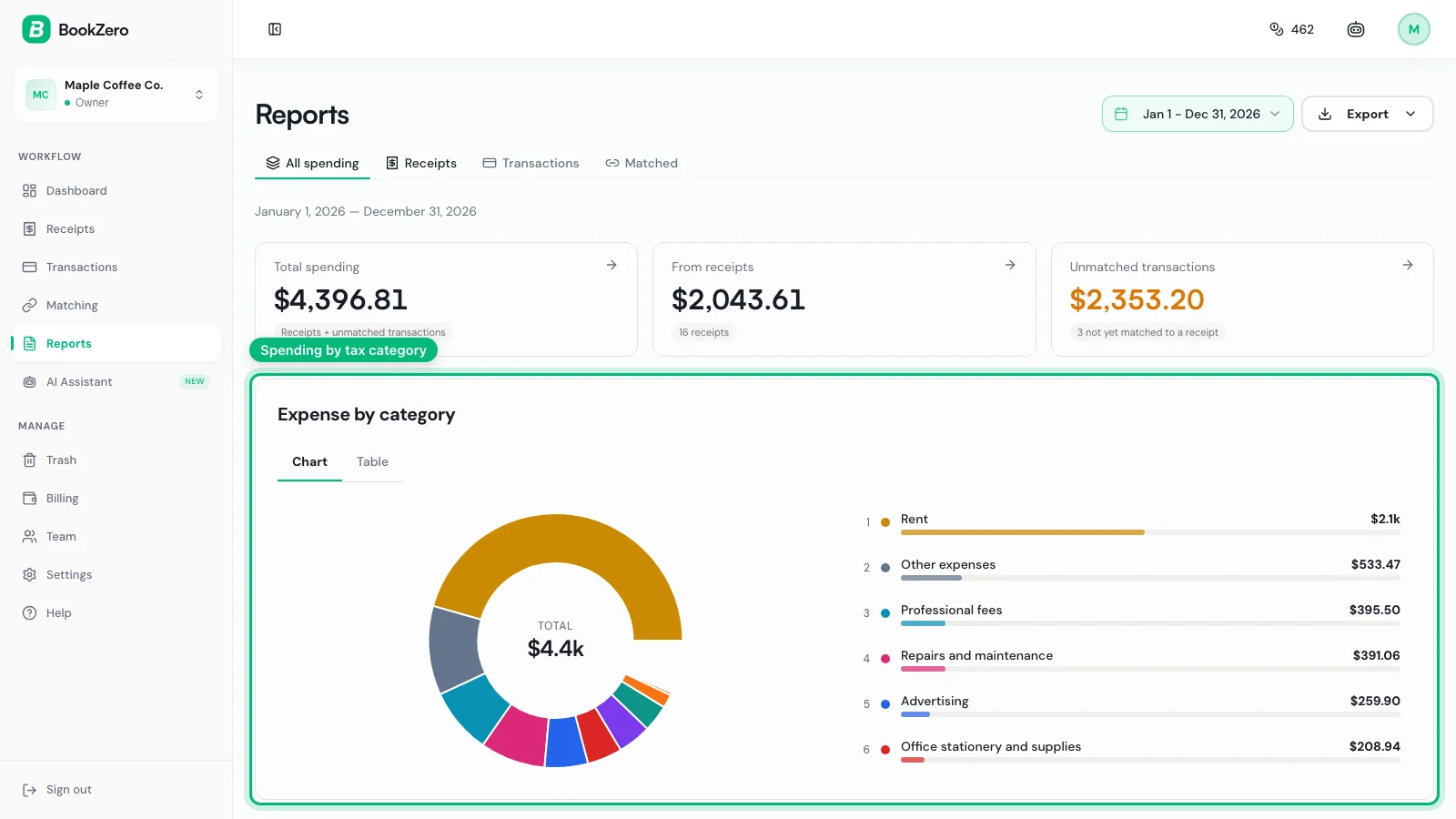
The Schedule C tax report comes with the Growth plan and above; CSV, Excel and PDF exports start on Solo. Compare plans on the features page.
Frequently Asked Questions
What is small company bookkeeping?
It is recording every sale and purchase with proof, sorting costs into tax categories and checking them against the bank each month, so the owner knows the numbers and can file on time.
Do I need a separate bank account for my small company?
IRS Publication 583 says to keep your business account separate from your personal checking account. It makes matching and an audit far easier.
Should a small company use cash or accrual?
Most service businesses use cash, which counts income when received and costs when paid. Companies with inventory or many unpaid invoices often use accrual.
How long should a small company keep receipts?
The IRS says 3 years in most cases, 4 years for employment tax records, 6 years if income over 25 percent was left off, and 7 years for bad debt or worthless securities claims.
Can I do my own bookkeeping as a small company?
Yes. With one business account, a monthly match and Schedule C categories, most owners keep their own books and hand a clean report to a preparer at tax time.

Eric Tech· Founder, BookZero.ai
Founder of BookZero. Building AI-powered bookkeeping tools for US and Canadian freelancers and small businesses.
View all postsStay ahead of tax season
Tax tips, deduction strategies, and feature announcements straight to your inbox. No spam, unsubscribe anytime.