Gig Worker Tax Guide Canada: Uber, DoorDash, and Freelance Taxes (2026)
Complete tax guide for Canadian gig workers — Uber drivers, DoorDash couriers, freelancers, and platform workers. Deductions, GST/HST, deadlines, and bookkeeping.
 Eric Tech·Mar 18, 2026·5 min read·
Gig Workers Are Self-Employed
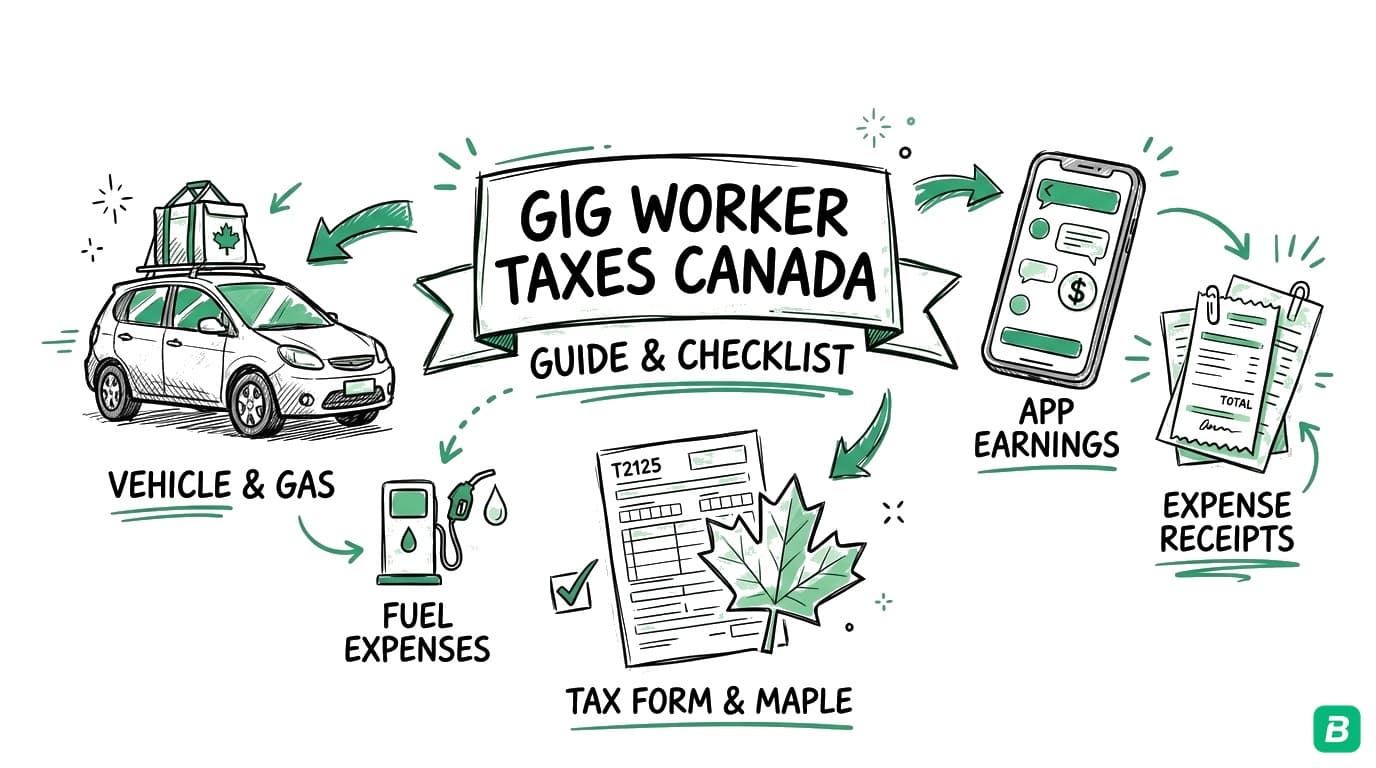
If you drive for Uber, deliver for DoorDash, freelance on Upwork, or earn income from any gig platform, the CRA considers you self-employed. This means you are responsible for your own income tax, CPP contributions, GST/HST (if applicable), and record keeping.
No employer withholds taxes for you. No T4 slip arrives in February with everything pre-calculated. You must track your income, claim your deductions, and file your taxes correctly — or face penalties, interest, and potential audits.
This hub page organizes every guide relevant to gig workers in Canada. Start with whichever topic is most pressing, or read through them all for a complete picture.
Platform-Specific Tax Guides
Each gig platform has different income reporting, expense patterns, and tax considerations.
Uber Driver Tax Deductions in Canada
Complete guide for rideshare drivers — vehicle expenses (fuel, maintenance, insurance, depreciation), phone and data costs, cleaning supplies, and how to calculate business-use percentage. Includes the CRA vehicle log requirement and common audit triggers.
DoorDash and Uber Eats Tax Deductions in Canada
Tax deductions specific to food delivery drivers — vehicle costs, insulated delivery bags, bike maintenance, parking, phone mounts, and platform-specific income reporting. Covers differences between delivery and rideshare for tax purposes.
Tax Filing and Deadlines
Knowing when things are due — and what happens when you miss a deadline — is essential.
Canada Tax Deadlines 2026
Every CRA deadline for 2026 including the self-employed June 15 filing extension, April 30 payment deadline, quarterly instalments, and GST/HST remittances. Month-by-month calendar with penalty calculations.
How to File Taxes as a Self-Employed Canadian
Step-by-step filing guide — gathering documents, completing your T2125, calculating CPP, and submitting your T1 return. Essential reading for gig workers filing self-employment income for the first time.
T2125 Form Guide for Self-Employed Canadians
Line-by-line walkthrough of the T2125 Statement of Business or Professional Activities. As a gig worker, this is the form where you report platform income and claim business deductions. Covers vehicle expenses (Part 9) and home office (Part 10) in detail.
GST/HST for Gig Workers
GST/HST registration is mandatory once your gross revenue exceeds $30,000 in any 12-month period. Many gig workers hit this threshold sooner than expected.
GST/HST Guide for Small Businesses in Canada
When to register, how to collect, Input Tax Credits, filing frequencies, and the Quick Method. Critical for gig workers approaching or exceeding the $30,000 threshold. Note: Uber already collects and remits GST/HST on your behalf for rideshare fares, but DoorDash does not.
Bookkeeping for Gig Workers
Staying organized throughout the year prevents the April tax-time scramble.
Bookkeeping for Gig Workers in Canada
How to organize finances when you have income from multiple platforms — separating business and personal expenses, tracking mileage, managing receipts, and monitoring the GST/HST threshold. Practical advice specific to multi-platform gig workers.
Year-End Tax Checklist for Self-Employed Canadians
Month-by-month checklist from October through March. Use this to close your books, maximize deductions before December 31, and prepare for filing. Especially useful for gig workers who have never done year-end prep before.
Common Gig Worker Questions
Do I need to file if I only earned a small amount? Yes. There is no minimum income threshold for filing when you are self-employed. Even if you earned $500 from DoorDash, you must report it.
How do I track mileage? The CRA requires a vehicle log showing business vs personal kilometres. Use a dedicated mileage app or a simple notebook. You need the date, destination, purpose, and kilometres for each business trip. Estimates are not accepted in an audit.
Do I need to charge GST/HST? Only if your gross revenue (from all self-employment sources combined) exceeds $30,000 in any rolling 12-month period. Once you cross the threshold, registration is mandatory — not optional.
Can I deduct my phone? Yes, proportional to business use. If you use your phone 60% for gig work (GPS, app, customer communication) and 40% for personal use, you can deduct 60% of your phone bill and data plan.
Frequently Asked Questions
Do gig workers need to register for GST/HST?
Only if your gross revenue from all self-employment sources combined exceeds $30,000 in any rolling 12-month period. Once you cross the threshold, you have 29 days to register — it is mandatory, not optional. See our GST/HST guide for the full registration process.
Can I deduct my phone plan as a gig worker?
Yes, proportional to business use. If you use your phone 60% for gig work (GPS navigation, driver app, customer communication) and 40% for personal use, you can deduct 60% of your monthly phone bill and data plan. Keep a log of how you determined the business-use percentage.
How do I report tips from food delivery?
Tips are taxable income and must be reported on your T2125 form as part of your gross business income. This includes both cash tips and tips received through the app. Uber Eats and DoorDash include tips in your annual tax summary, but cash tips are your responsibility to track.
What if I drive for both Uber and DoorDash — do I file separately?
No. You file one T2125 form combining all self-employment income and expenses. You can list multiple business activities on the same form. However, you should keep separate records for each platform so you can reconcile against the tax summaries each company provides.
Where to Start
First time filing gig income? Read How to File Taxes as a Self-Employed Canadian, then your platform-specific guide (Uber or DoorDash).
Approaching the GST/HST threshold? Read the GST/HST Guide immediately — you must register within 29 days of exceeding $30,000.
Need to get organized? Read Bookkeeping for Gig Workers and try BookZero free — AI receipt scanning with CRA category mapping, built for exactly this situation.

Eric Tech· Founder, BookZero.ai
Founder of BookZero. Building AI-powered bookkeeping tools for US and Canadian freelancers and small businesses.
View all postsStay ahead of tax season
Tax tips, deduction strategies, and feature announcements straight to your inbox. No spam, unsubscribe anytime.