Uber Driver Tax Deductions Canada 2026: The Complete Guide
Every tax deduction Canadian Uber drivers can claim in 2026 — vehicle, mileage, phone, home office, and how to file your T2125.
 Eric Tech·Feb 17, 2026·Updated Sep 30, 2026·8 min read·
Who This Guide Is For
If you drive for Uber, Uber Eats, or Lyft in Canada, the CRA considers you a self-employed independent contractor. You do not receive a T4 slip. Instead, you report your income and expenses on Form T2125 as part of your personal tax return.
This means you are responsible for tracking your own income, collecting GST/HST when required, and claiming every deduction you are entitled to. The good news is that the list of deductions available to ride-share drivers is substantial.
This guide is for informational purposes only and does not constitute tax advice. Consult a qualified tax professional for your specific situation. All figures are based on 2026 CRA guidelines.
Do Uber Drivers Need to Register for GST/HST?
Yes, if you drive passengers. Commercial ride-sharing drivers must register for GST/HST from their first dollar of fares, even if they are small suppliers. The $30,000 small-supplier threshold that lets other small businesses wait does not apply to ride-sharing, and it has not since July 1, 2017.
Register before you give your first paid ride. You must charge GST/HST on every fare and send it to the CRA; using the Uber app to collect fares does not move that responsibility to Uber. Failing to register does not exempt you from owing the tax — CRA can assess it retroactively.
Registering also lets you claim Input Tax Credits (ITCs) on business expenses like gas, maintenance, and your phone plan. Food delivery is different: delivering meals or parcels is not ride-sharing, so the usual $30,000 small-supplier threshold applies to that income. For a full breakdown of how GST/HST works, see our complete GST/HST guide for Canadian small businesses.
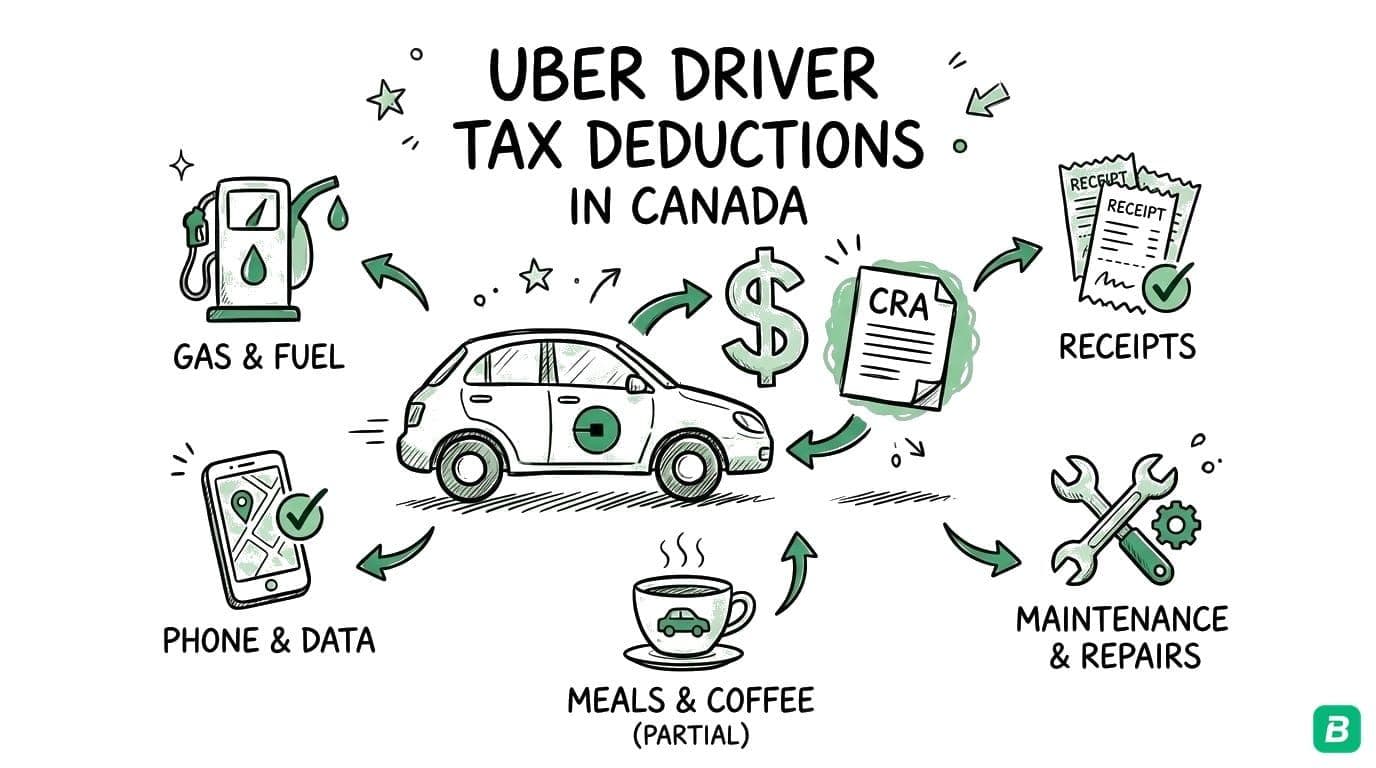
The Complete List of Uber Driver Tax Deductions
Vehicle Expenses: Actual Cost Method
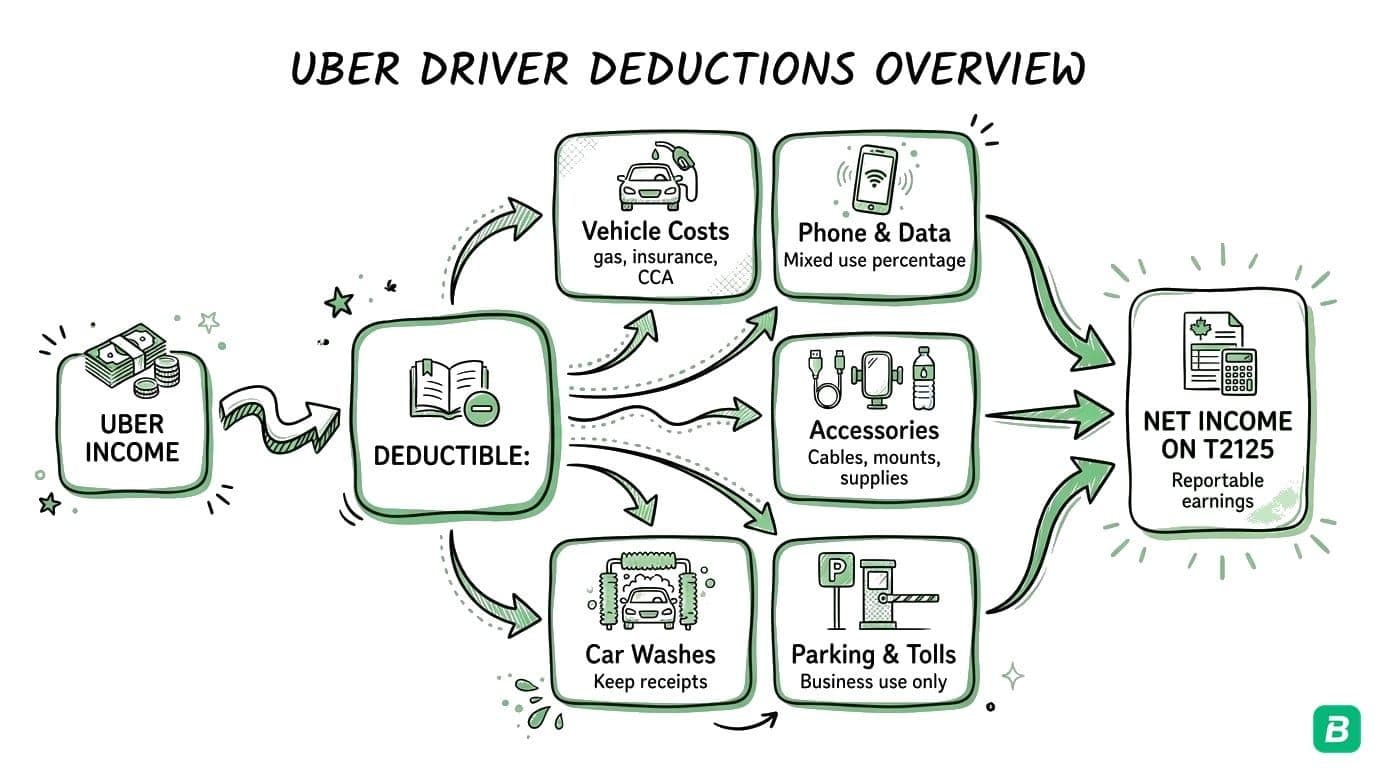
The largest deduction category for most drivers is vehicle expenses. Under the actual cost method, you track every vehicle-related expense for the year and then multiply the total by your business-use percentage.
Eligible expenses include:
- Gas and fuel — Every fill-up while driving for business
- Insurance — The business-use portion of your auto insurance premium
- Maintenance and repairs — Oil changes, tire rotations, brake pads, car washes
- Lease payments — Up to $1,100 per month (2026 CRA limit) for the business-use portion
- Capital Cost Allowance (CCA) — Depreciation on a vehicle you own (Class 10 at 30% declining balance)
- Licence and registration fees — Annual plate renewal, driver licence renewal
- Parking — Business-related parking only (not personal errands)
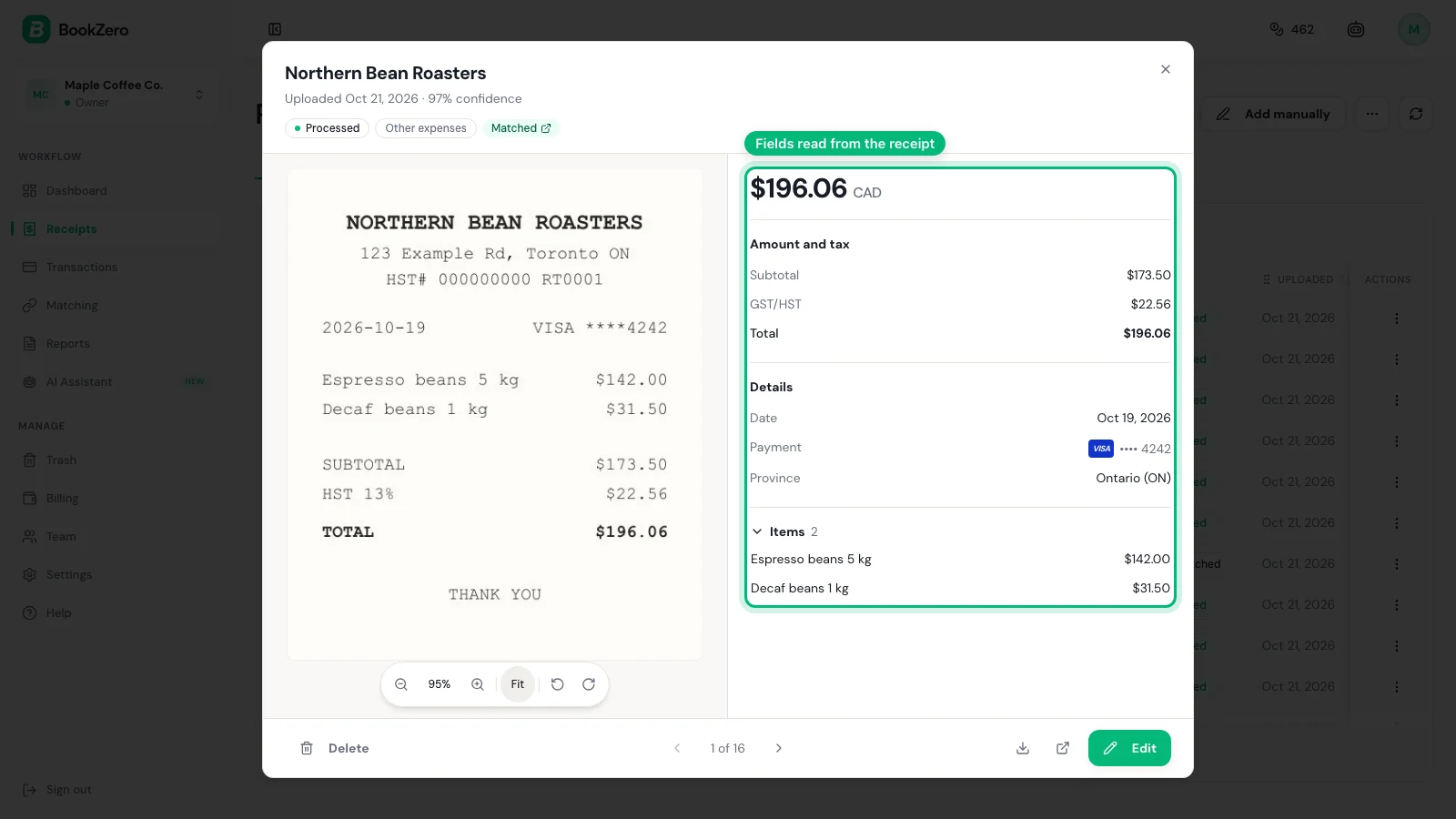
To calculate your business-use percentage, divide your total business kilometres by your total kilometres for the year. If you drove 40,000 km total and 28,000 km were for Uber, your business-use percentage is 70%.
Vehicle Expenses: What About the CRA Per-km Rate?
You may see the CRA's reasonable per-kilometre allowance rates ($0.73 for the first 5,000 km and $0.67 after that in 2026). Those rates are for employers paying employees a tax-free allowance — they are not a deduction method on your T2125. As a self-employed driver, you claim your actual vehicle costs multiplied by your business-use percentage.
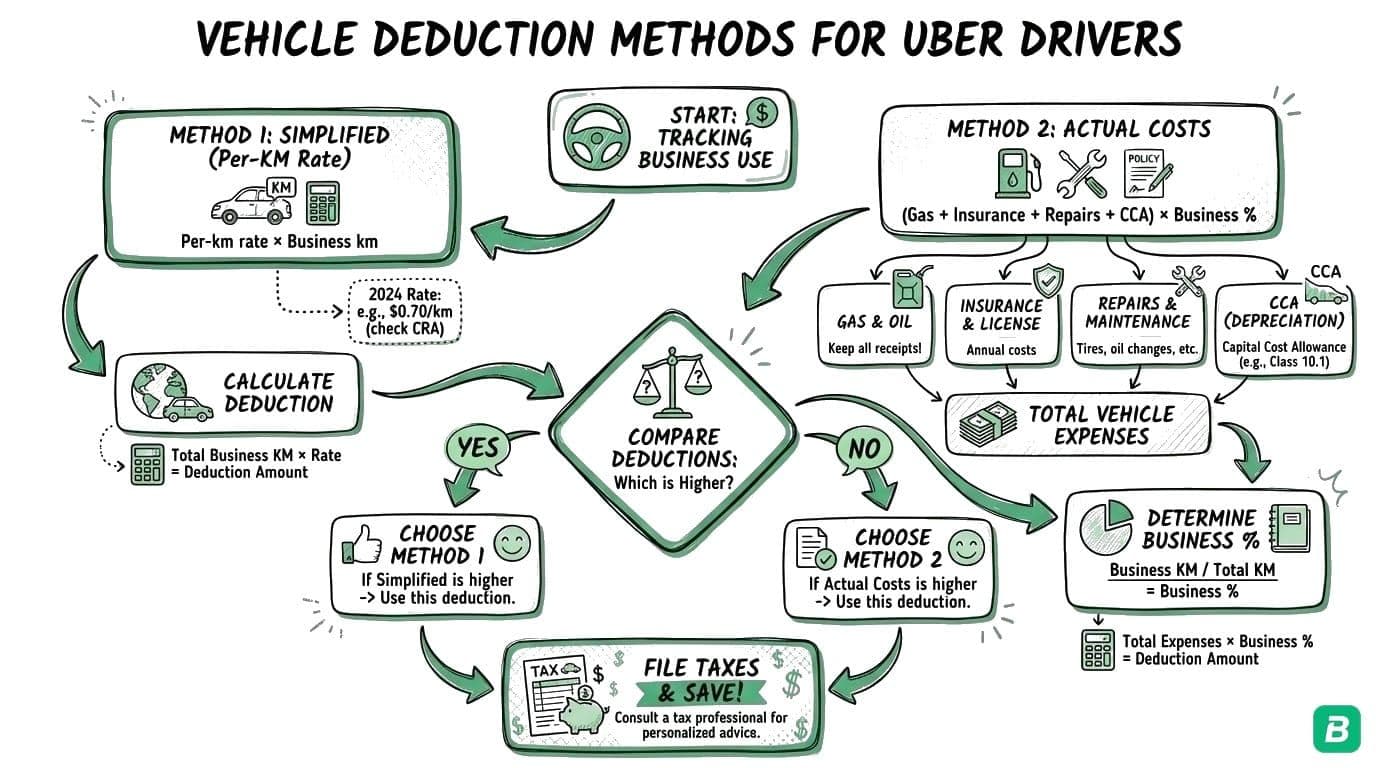
The CRA requires a logbook documenting your business trips. Record the date, destination, distance in kilometres, and purpose for every trip. Without a logbook, CRA can deny your entire vehicle deduction.
Phone and Data Plan
Your smartphone is essential for driving — you need it for the Uber app, navigation, and communication with riders. The business-use portion of your monthly phone and data plan is deductible.
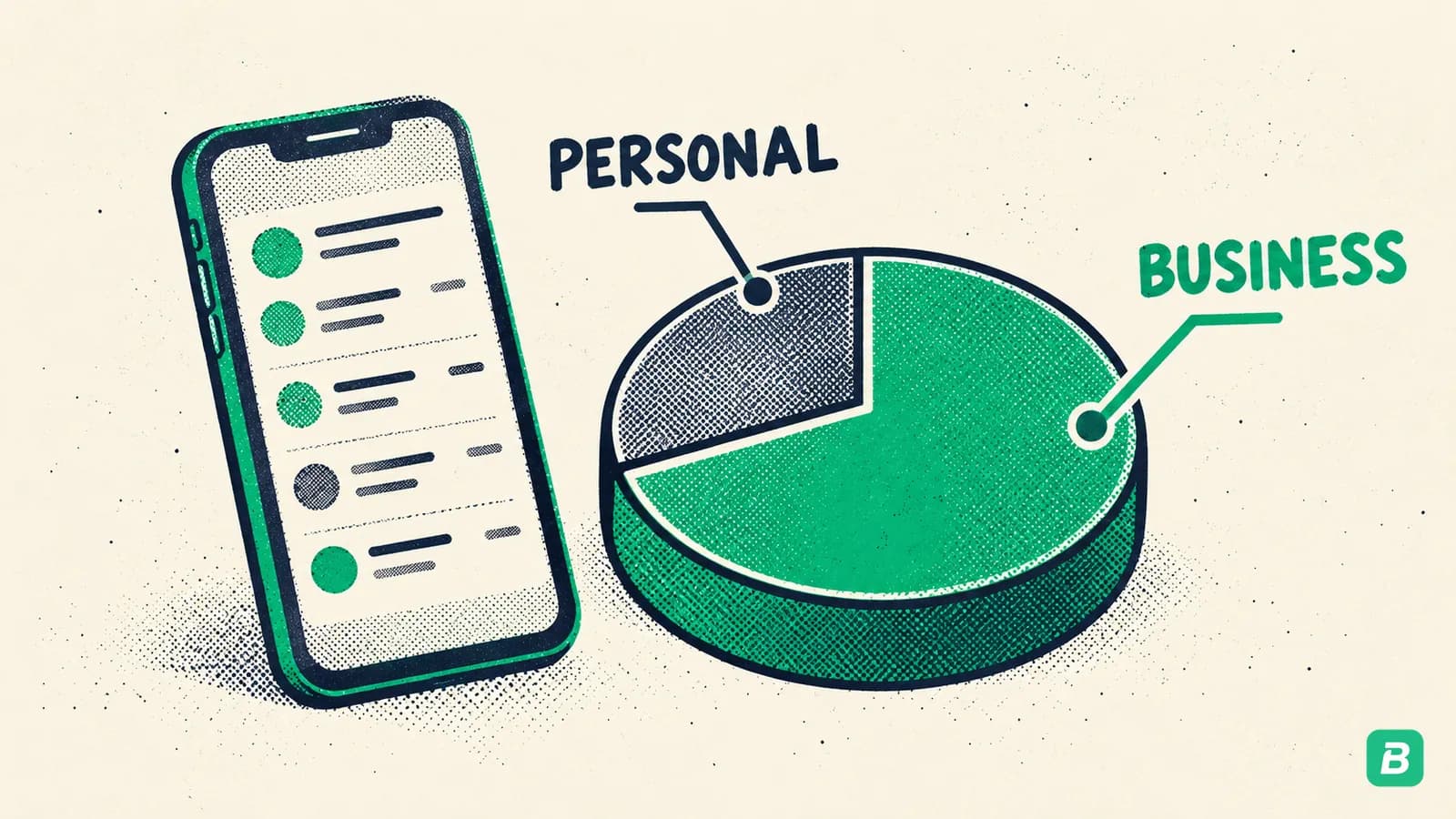
Calculate your business-use percentage based on how much of your phone usage is for driving. If you use your phone 60% for Uber and 40% for personal use, you can deduct 60% of your monthly bill.
Rideshare Platform Fees
Uber charges a service fee on every trip — typically 25% of the fare. This fee is 100% deductible as a business expense. Enter it on Line 8871 (Management and administration fees) of your T2125.
Home Office Expenses
If you use a dedicated space in your home for managing your Uber business — tracking expenses, reviewing trip summaries, filing taxes — you may be able to claim home office expenses.
Eligible costs include rent, mortgage interest (not principal), property taxes, utilities, and home insurance. Calculate the deduction based on the square footage of your workspace relative to your total home.
Meals During Long Shifts
Meals purchased during a driving shift are 50% deductible, provided they are not reimbursed and are consumed during the course of business. Keep your receipts.
Professional Fees
Accounting software subscriptions, tax preparation fees, and any professional services related to your driving business are fully deductible.
What Records Does the CRA Require?
The CRA expects you to maintain organized records for at least six years after the tax year. For Uber drivers, this means:
- Mileage logbook — Date, destination, kilometres driven, purpose of each trip
- Receipts — For every deductible expense (gas, maintenance, phone, etc.)
- Bank statements — Showing deposits from Uber and business-related purchases
- Uber annual summary — Your income statement from the Uber driver portal

Digital records are accepted by CRA. You do not need paper copies as long as your digital files are legible and organized.
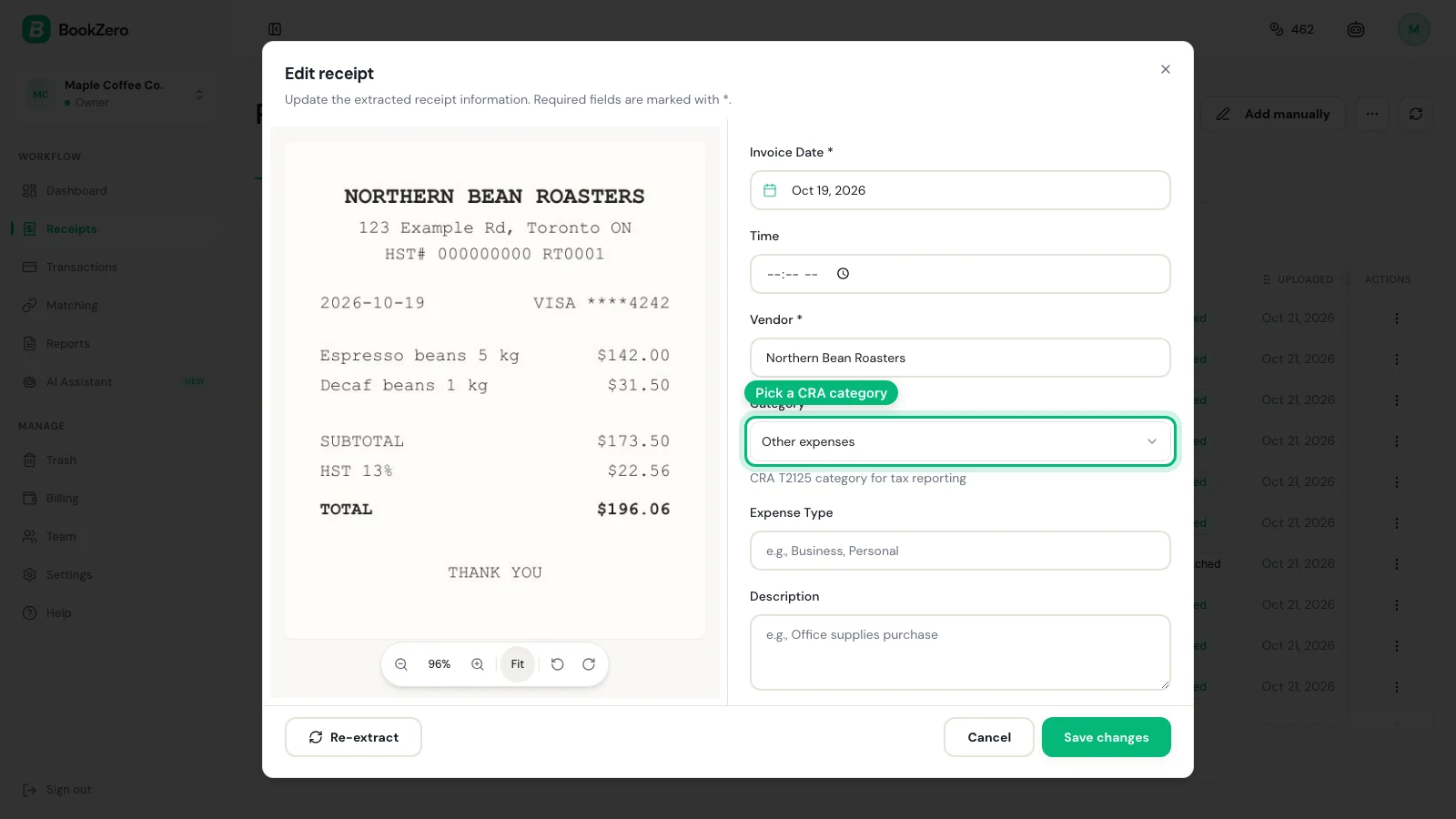
BookZero scans your receipts with AI and automatically categorizes them using CRA T2125 expense categories. No spreadsheets, no shoebox of receipts. See how it works.
How to File: The T2125 Form
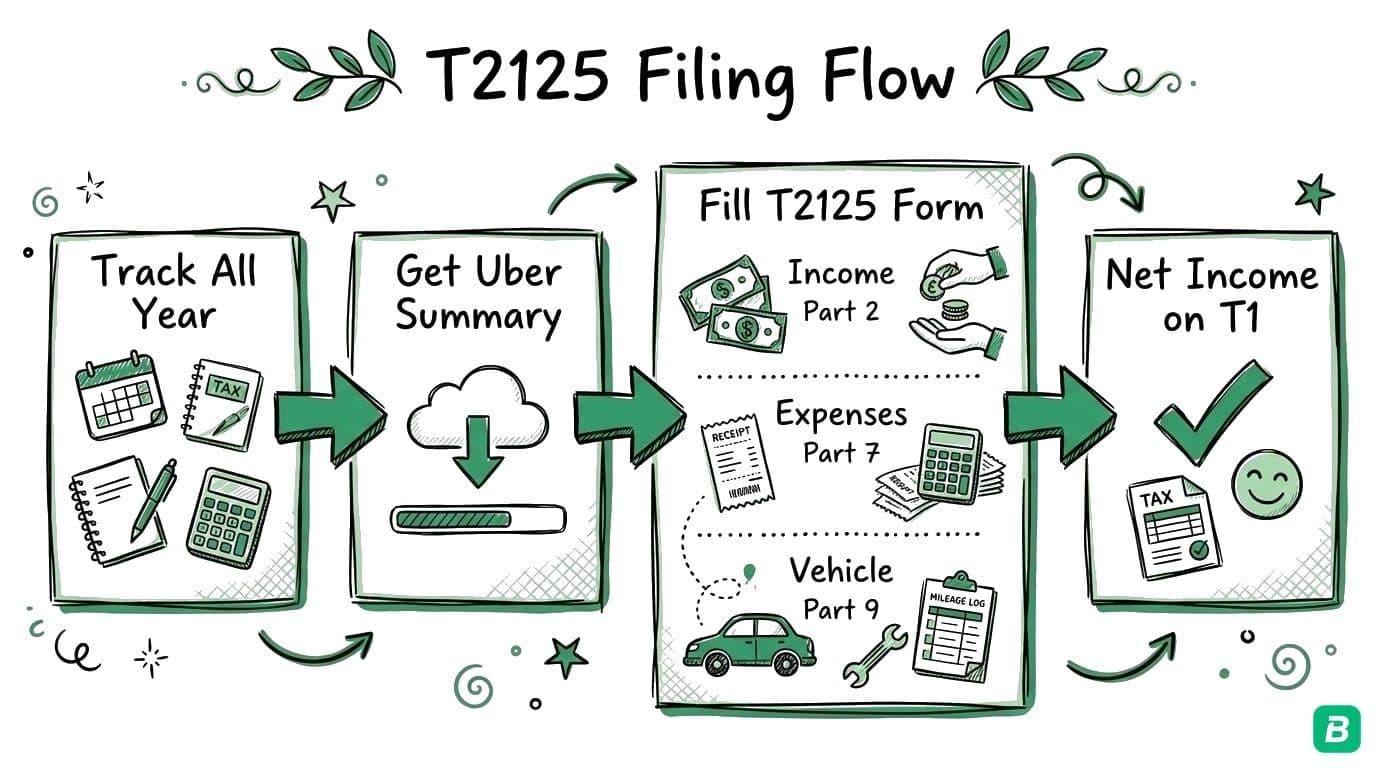
All your Uber income and deductions go on CRA Form T2125 — Statement of Business or Professional Activities. Here is where the key numbers land:
| Item | T2125 Location |
|---|---|
| Gross ride-share income | Part 2, Line 8000 |
| Platform fees | Part 7, Line 8871 |
| Phone expenses | Part 7, Line 9220 |
| Office expenses | Part 7, Line 8810 |
| Vehicle expenses | Part 9 |
| Home office expenses | Part 10 |
| Net business income | Part 11, Line 9946 |
Your net business income flows to your T1 personal tax return on Line 13500. For a complete walkthrough of every section, read our T2125 form guide for self-employed Canadians.
Frequently Asked Questions
Do I get a T4 from Uber?
No. Uber drivers are independent contractors, not employees. Uber does not issue a T4. You may receive a T4A if your earnings exceed a certain threshold, but you are responsible for reporting all income regardless.
Can I deduct my car loan payments?
Loan principal payments are not deductible. However, you can claim Capital Cost Allowance (CCA) on a vehicle you own, which provides a depreciation deduction. Loan interest is deductible as part of your vehicle expenses.
What if I only drive part-time?
The same rules apply. You prorate all vehicle expenses by your business-use percentage. If you drove 5,000 km for Uber out of 20,000 km total, your business-use percentage is 25%.
Can I claim a GPS or dashcam?
Yes. A GPS device or dashcam used for business is deductible. If the cost is under $500, you can expense it in the year of purchase. Over $500, claim CCA over multiple years.
Built for gig workers — scan receipts, categorize vehicle expenses



Eric Tech· Founder, BookZero.ai
Founder of BookZero. Building AI-powered bookkeeping tools for US and Canadian freelancers and small businesses.
View all postsStay ahead of tax season
Tax tips, deduction strategies, and feature announcements straight to your inbox. No spam, unsubscribe anytime.